<?xml version="1.0" encoding="UTF-8"?>
<feed xmlns="http://www.w3.org/2005/Atom">
    <title>Unloosen</title>
    <link rel="alternate" type="text/html" href="http://unloosen.com/" />
    <link rel="self" type="application/atom+xml" href="http://unloosen.com/atom.xml" />
    <id>tag:unloosen.com,2005-04-10://2</id>
    <updated>2011-02-22T03:27:11Z</updated>
    <subtitle>Stories, Photos &amp; Commentary Skewed Absurd</subtitle>
    <generator uri="http://www.sixapart.com/movabletype/">Movable Type 5.02</generator>

<entry>
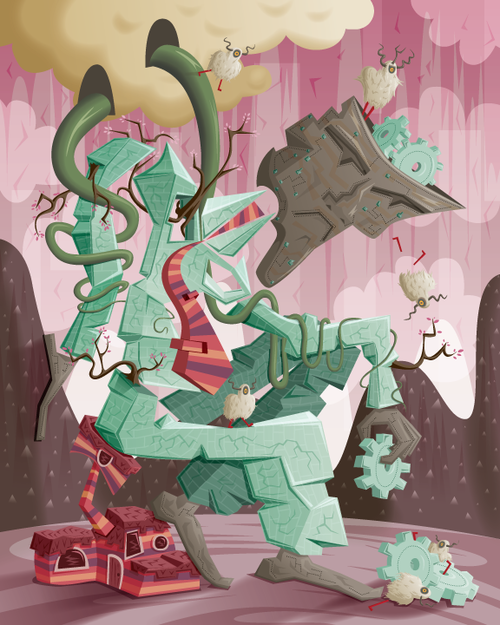
    <title>Dudleya</title>
    <link rel="alternate" type="text/html" href="http://www.unloosen.com/thestuff/archives/2011/02/dudleya.html" />
    <id>tag:unloosen.com,2011://2.651</id>

    <published>2011-02-22T03:19:19Z</published>
    <updated>2011-02-22T03:27:11Z</updated>

    <summary>Dudleyas grow in canyons here in California. I have one planted on the side of my house, but it was hit by a car so it looks all mangled now. Mine has crazy tendrils that will start flowering any day...</summary>
    <author>
        <name>Chris Leavens</name>
        <uri>http://www.unloosen.com/control/?__mode=view&amp;blog_id=2&amp;id=1</uri>
    </author>
    
        <category term="Images" scheme="http://www.sixapart.com/ns/types#category" />
    
        <category term="Chris Leavens" scheme="http://www.sixapart.com/ns/types#category" />
    
    
    <content type="html" xml:lang="en" xml:base="http://unloosen.com/">
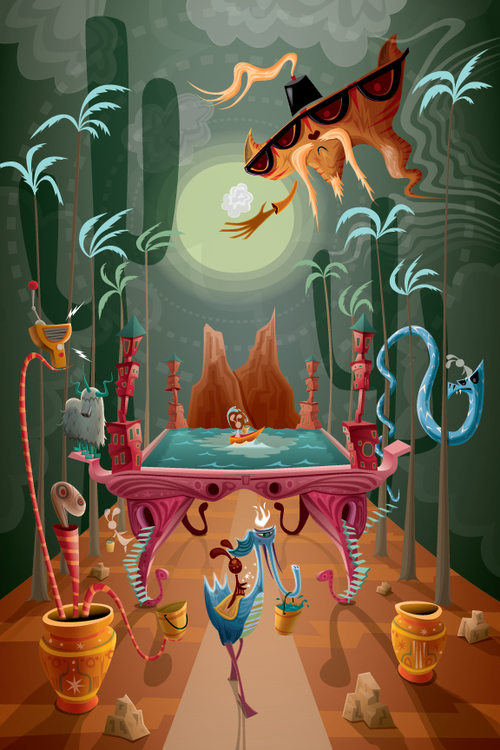
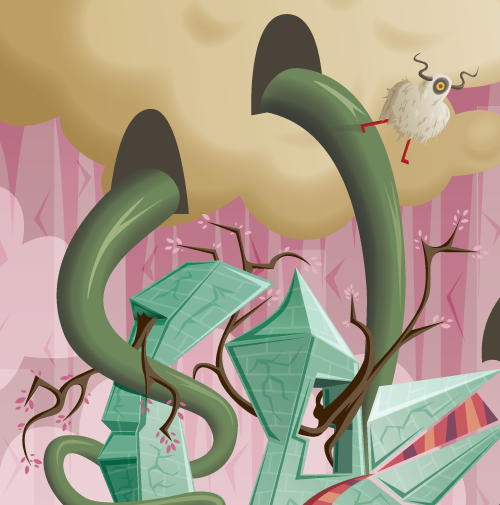
        <![CDATA[<a href="http://unloosen.com/assets_c/2011/02/dudleya3FIN-246.html" onclick="window.open('http://unloosen.com/assets_c/2011/02/dudleya3FIN-246.html','popup','width=576,height=720,scrollbars=no,resizable=no,toolbar=no,directories=no,location=no,menubar=no,status=no,left=0,top=0'); return false"><img src="http://unloosen.com/assets_c/2011/02/dudleya3FIN-thumb-500x625-246.png" alt="dudleya3FIN.png" class="mt-image-center" style="text-align: center; display: block; margin: 0pt auto 20px;" height="625" width="500" /></a><br /><br />Dudleyas grow in canyons here in California. I have one planted on the side of my house, but it was hit by a car so it looks all mangled now. Mine has crazy tendrils that will start flowering any day now.<br />]]>
        
    </content>
</entry>

<entry>
    <title>A Billion Stories @ dialect: Photos</title>
    <link rel="alternate" type="text/html" href="http://www.unloosen.com/thestuff/archives/2011/01/a_billion_stories_dialect_phot.html" />
    <id>tag:unloosen.com,2011://2.650</id>

    <published>2011-01-14T08:24:01Z</published>
    <updated>2011-01-14T18:33:15Z</updated>

    <summary>Here are a few quick photos of my show at dialect in downtown LA! Show runs through February 5, so stop by if you&apos;re in town. More show info here. Thanks to everyone who came to the opening and art...</summary>
    <author>
        <name>Chris Leavens</name>
        <uri>http://www.unloosen.com/control/?__mode=view&amp;blog_id=2&amp;id=1</uri>
    </author>
    
        <category term="Chris Leavens" scheme="http://www.sixapart.com/ns/types#category" />
    
        <category term="News" scheme="http://www.sixapart.com/ns/types#category" />
    
    
    <content type="html" xml:lang="en" xml:base="http://unloosen.com/">
        <![CDATA[Here are a few quick photos of my show at dialect in downtown LA! Show runs through February 5, so stop by if you're in town. More show info <a href="http://http//www.unloosen.com/thestuff/archives/2011/01/a_billion_stories_-_art_show_a.html">here</a>. Thanks to everyone who came to the opening and art walk.<br /><br /><a href="http://unloosen.com/assets_c/2011/01/dialect_0007-231.html" onclick="window.open('http://unloosen.com/assets_c/2011/01/dialect_0007-231.html','popup','width=800,height=535,scrollbars=no,resizable=no,toolbar=no,directories=no,location=no,menubar=no,status=no,left=0,top=0'); return false"><img src="http://unloosen.com/assets_c/2011/01/dialect_0007-thumb-500x334-231.png" alt="dialect_0007.png" class="mt-image-center" style="text-align: center; display: block; margin: 0pt auto 20px;" width="500" height="334" /></a>More photos after the jump!<br /><div><br /></div>]]>
        <![CDATA[<a href="http://unloosen.com/assets_c/2011/01/dialect_0001-234.html" onclick="window.open('http://unloosen.com/assets_c/2011/01/dialect_0001-234.html','popup','width=800,height=535,scrollbars=no,resizable=no,toolbar=no,directories=no,location=no,menubar=no,status=no,left=0,top=0'); return false"><img src="http://unloosen.com/assets_c/2011/01/dialect_0001-thumb-500x334-234.png" alt="dialect_0001.png" class="mt-image-center" style="text-align: center; display: block; margin: 0pt auto 20px;" width="500" height="334" /></a><div><a href="http://unloosen.com/assets_c/2011/01/dialect_0008-237.html" onclick="window.open('http://unloosen.com/assets_c/2011/01/dialect_0008-237.html','popup','width=800,height=528,scrollbars=no,resizable=no,toolbar=no,directories=no,location=no,menubar=no,status=no,left=0,top=0'); return false"><img src="http://unloosen.com/assets_c/2011/01/dialect_0008-thumb-500x330-237.png" alt="dialect_0008.png" class="mt-image-center" style="text-align: center; display: block; margin: 0pt auto 20px;" width="500" height="330" /></a></div><div><a href="http://unloosen.com/assets_c/2011/01/dialect_0004-240.html" onclick="window.open('http://unloosen.com/assets_c/2011/01/dialect_0004-240.html','popup','width=800,height=559,scrollbars=no,resizable=no,toolbar=no,directories=no,location=no,menubar=no,status=no,left=0,top=0'); return false"><img src="http://unloosen.com/assets_c/2011/01/dialect_0004-thumb-500x349-240.png" alt="dialect_0004.png" class="mt-image-center" style="text-align: center; display: block; margin: 0pt auto 20px;" width="500" height="349" /></a></div><div><a href="http://unloosen.com/assets_c/2011/01/dialect_0012-243.html" onclick="window.open('http://unloosen.com/assets_c/2011/01/dialect_0012-243.html','popup','width=800,height=507,scrollbars=no,resizable=no,toolbar=no,directories=no,location=no,menubar=no,status=no,left=0,top=0'); return false"><img src="http://unloosen.com/assets_c/2011/01/dialect_0012-thumb-500x316-243.png" alt="dialect_0012.png" class="mt-image-center" style="text-align: center; display: block; margin: 0pt auto 20px;" width="500" height="316" /></a></div><div><br /></div>]]>
    </content>
</entry>

<entry>
    <title>Our Year of Eighties: The Postmortem</title>
    <link rel="alternate" type="text/html" href="http://www.unloosen.com/thestuff/archives/2011/01/our_year_of_eighties_the_postm.html" />
    <id>tag:unloosen.com,2011://2.649</id>

    <published>2011-01-14T02:30:41Z</published>
    <updated>2011-01-25T12:05:52Z</updated>

    <summary>Joe: Where was the beef? What was Willis talking about? Who could it have been now? The 1980s presented us with so many baffling questions. Last January, Mr. Clark and I embarked upon a hazardous journey through some of the...</summary>
    <author>
        <name>Joe Blevins and Craig J. Clark</name>
        <uri>http://www.unloosen.com/control/?__mode=view&amp;blog_id=2&amp;id=44</uri>
    </author>
    
        <category term="Movies" scheme="http://www.sixapart.com/ns/types#category" />
    
        <category term="Reviews" scheme="http://www.sixapart.com/ns/types#category" />
    
    <category term="craigandjoewatchmoviesyouveactuallyheardof" label="craig and joe watch movies you&apos;ve actually heard of" scheme="http://www.sixapart.com/ns/types#tag" />
    
    <content type="html" xml:lang="en" xml:base="http://unloosen.com/">
        <![CDATA[<p><B>Joe:</B> Where <i>was</i> the beef? What <i>was</i> Willis talking about? <i>Who</i> could it have been now? The 1980s presented us with so many baffling questions. Last January, Mr. Clark and I embarked upon a hazardous journey through some of the the decade's more memorable films in search of answers to these and other queries. And we did learn a great deal about the decade of Reagan and the Rubik's Cube. But more importantly, we learned something about -- wait for it -- <i>ourselves.</i> Along the way, we screened comedies, horror films, dramas, comedies, science-fiction films, and even comedies. Wait, did I mention "comedies" more than once? I'm sorry. It's just that those movies were so god damnably hard to write about that they left a permanent scar on my psyche. Anyway, now that our year-long vision quest is complete (damnit, we should've done <i>Vision Quest</i>!), I thought it was important to get some "closure" on the whole process, which is why I've invited Mr. Clark here for this frank and unguarded conversation about the movies we reviewed. I think I'll start with the obvious question: why the 1980s rather than some other, perhaps more tasteful decade?<br />
 <br />
<B>Craig:</B> That's a good question, Joe. I was six at the dawn of the decade and 16 when it went bye-bye, so I suppose one could say the '80s was when I came of age as a consumer of popular culture. I'm sure that must also account for why most of the movies I wanted to cover (such as <I>Explorers</I>, <I>Spies Like Us</I>, <I>Buckaroo Banzai</I> and <I>Weird Science</I>) were ones that hailed from the middle of the decade, when I was on the cusp of puberty and thus the most impressionable. And yes, we did lean rather heavily on the comedies as the expense of other genres (I notice that we didn't cover a single action film in the whole lot) and we also shied away from some of the biggest stars like Stallone, Schwarzeneggar, Cruise and Murphy. Even as we set out to watch movies that people had actually heard of (as opposed to things like <I>Trapped Ashes</I> and <I>Repo! The Genetic Opera</I>, which people could happily go their whole lives without ever seeing and never know the difference), we still managed to avoid most of the biggest movies of the decade. Could that be the result of our lingering contrarian streak? Inquiring minds want to know, Joe!</p>]]>
        <![CDATA[<p><B>Joe:</B> I'm glad you brought up the word "contrarian" (even though my spell checker doesn't like it) because I've made a concerted effort in the last year or so <i>not</i> to be a deliberate contrarian. I now wince when people use the word "mainstream" as a pejorative, and I'm getting less and less interested in -- and patient with -- the divisions between "highbrow," "middlebrow," "lowbrow" and "no-brow." So much about the way we discuss popular culture in 2011 -- not just movies, but TV and music and stand-up comedy, too -- is poisoned by this kind of thinking. It's not enough for a movie just to be "good" anymore. It has to be approved by the "right" kinds of critics and, more importantly, <i>not</i> be popular with the "wrong" kinds of consumers. It's not only maddening and boring, it's a creative and philosophical dead end. I don't think these kinds of battle lines were drawn so sharply in the 1980s, because it was before the dawn of the Internet and we didn't have this avalanche of opinion raining down on our heads every single hour of the day. I suppose there were rainbow-haired and safety-pinned punk kids sneering at Huey Lewis and the News, but they pretty much kept to themselves and didn't have this instantaneous global platform. I mentioned this in our discussion of <i>Explorers</I> that the movie chronicled the era when nerds weren't in constant contact with each other. By that same token, pop culture elitists weren't forming online alliances either, so they didn't have the opportunity to get all in our faces about liking the "wrong" kinds of entertainment. If you liked Huey Lewis back then, you could just go buy a copy of <i>Sports</i> at the mall and not worry about what Pitchfork or Stereogum would have to say about it.<br />
 <br />
But getting back to your question, I don't think we were being too obscure in our choices. We did cover at least one of the biggest-grossing films of all time, plus at least three entries in popular film franchises (Superman, the Muppets, <i>Back to the Future</i>). I think for the most part we aimed for the multiplex and not the arthouse. The artiest film we did was probably <i>The Elephant Man</i>, and I think that played pretty widely everywhere, didn't it? I credit you with keeping the project from getting too self-indulgent. I'm a die-hard nerd at heart, and there were certainly times when I wanted to nominate more obscure films. In retrospect, we could have done even more to appease the (ultimately nonexistent) readers, like letting them choose the movies for us in advance. Or we could have gone totally in the opposite direction and covered our own personal favorite films, regardless of popularity. Ultimately, I think we stuck to a middle ground. Were you happy for the most part with the films we chose?<br />
 <br />
<B>Craig:</B> For the most part, yes. Looking over the list of titles we initially threw around when we were figuring out what we wanted to write about, I'm sorry we didn't get to more that I hadn't seen. (As it is, the lone film I was introduced to during the series was <I>Purple Rain</I> and that was one I insisted on.) Among the films you suggested that we didn't pick were Eddie Murphy's <I>Raw</I> (which I suggested pairing with <I>Bill Cosby: Himself</I>) and <I>A Cry in the Dark</I>. The latter may have been a little too obscure, though, in spite of the <I>Seinfeld</I> episode where Elaine goes around the whole time doing her Meryl Streep impression. I'm also sorry we didn't cover <I>The King of Comedy</I>, which I saw once years ago and which might have been a good antidote to all of the comedies we <I>did</I> watch. And I would have liked to revisit <I>The Untouchables</I>, which holds a special place in my heart since it was the first R-rated film I ever saw in a theater (far away from parental supervision, of course).<br />
 <br />
That said, I feel we picked a goodly number of interesting films that helped to define us as moviegoers and the '80s in general. Which would explain why we stumped for so many comedies (13 by my count out of the 22 films in the series) because, let's face it, how many kids were clamoring to see historical epics like <I>Gandhi</I> or <I>The Last Emperor</I> or Woody Allen's latest attempt at being a serious filmmaker? To this day I'm still leery when it comes to Important Films with a capital "I," but back in December I re-watched Allen's <I>The Purple Rose of Cairo</I> to see how it held up after a quarter of a century. In 1985, the 12-year-old me would have turned it off after about five minutes because it was so depressing (setting a film during the Great Depression will do that). Today I recognize it as one of his masterworks, a film that contains untold wisdom about why people go to the movies and the sorts of things they expect -- nay, demand -- to see up on the silver screen. Could we have written an article about <I>Purple Rose</I>? Most certainly, yes. Would it have been an appropriate choice for us? That's harder to say.<br />
 <br />
<B>Joe:</B> Oh, wow, I wish we'd gotten to do <I>The Untouchables,</I> since, as you know, I visit one of the key locations from that film every workday. I buy my breakfast (the Union Station Metro Cafe's $1.99 Breakfast Special -- cheap, cheap, cheap and oh, so good!) just a few yards away from where the "baby carriage rolling down the stairs" scene was filmed. Also, I've been quoting Robert De Niro's "enthusiasms" speech for years. Another De Niro film you mentioned, <I>The King of Comedy</I>, would probably rank in my personal top 10 movies of all time. It's a film I love so much, I don't know if I'd be able to write about it very effectively. For me, the hardest films to write about were the ones that were closest to my heart. (Well, those and the spoof movies!) Our articles on <I>The Elephant Man</I>, <I>Monty Python's the Meaning of Life</I>, and <I>Little Shop of Horrors</I> were all torturous for me. The words came much more easily to me when I didn't have that much emotional investment in the films we were covering. For that reason, I think our articles during "neglected sequels month" were some of the best we did. I ended up liking both of those movies (with some strong caveats), but I didn't feel the least need to be defensive about them. How about you? Were some films more fun to write about than others?<br />
 <br />
<B>Craig:</B> Oh, certainly. I relished the opportunity to bring some attention to a few of my more cult-y faves like <I>Explorers</I>, <I>Buckaroo Banzai</I>, <I>Top Secret!</I> and <I>Time Bandits</I>. Although pretty much any time I took the lead on an article it was for a film that I felt a strong connection to and wanted to do right by. I must admit one exception to that was <I>Superman III</I>, which I had seen in theaters but hadn't had much impetus to revisit in the years since, despite my subsequent discovery and canonization of Richard Lester's '60s and '70s work. (The fact that it's yoked in my mind with the unfortunate <I>Supergirl</I> probably had something to do with that as well.) I also had to tough it out through the <I>Weird Science/Witches of Eastwick</I> article, largely because that was something of a shotgun marriage of inconvenience. (In retrospect, we probably shouldn't have doubled up twice in the same month.) When you get right down to it, though, the hardest articles for me to write were the ones that came after the comments on the site dried up. Our forced hiatus during the month of August couldn't have helped matters, but the fact that our <I>Meaning of Life</I> review went out there and didn't garner a single response did a lot to take the wind out of my sails. Even our horror film month seemed to fall on deaf ears (perhaps, like Seth Brundle's, they had all fallen off) and that's one genre that pretty much guarantees reader participation whenever I post a review on my personal blog. No wonder our output dropped to one film per month for November and December, causing our proposed reviews of <I>Stop Making Sense</I> (which you even teased at the end of <I>The Fly</I>) and <I>A Christmas Carol</I> to bite the dust.<br />
 <br />
Which brings me in a roundabout way to my next question. If we had a chance to start over, knowing what we know now, what would you change about the series? Personally, I wish we had used more stills throughout. It wasn't until March's entry that we started putting one at the end of each article and it took us doubling up on the films in June to move to the five-image standard that we maintained (with one exception) until the bitter end. As much as I like the way Frank Oz glowers at us at the top of our <I>Spies Like Us</I> article, I wish we had included more stills from the actual film.</p>

<p><B>Joe:</B> I agree with you about the stills. The more the better, and the more relevant to the movie the better. What else would I have done differently? Hmmm. Well, for one thing I would have chosen movies that would have (possibly) interested readers rather than just ourselves. I think a couple of readers commented at the beginning of the series that they wanted us to do <i>Commando</i>, and I think we should have gone in that direction. That could have been followed by <i>Red Dawn</i> or </i>Conan the Barbarian.</i> Also -- and I don't know whether you would have vetoed this idea -- I wish we'd used a basic template for all the reviews. Readers are looking for bite-sized pieces of information these days, and a lot of review sites and magazines are catering to them by breaking down their reviews into brief sections, each with a bolded subheading, like "What Worked," "What Didn't," "Things to Watch For," "Random Observations," etc. Even the AV Club, which has some of the smartest criticism on the net, does that for a lot of their reviews. I think some readers might have taken one gander at our articles, seen these big, imposing paragraphs, and moved on. Using subheadings or categories would not only have made our job easier, we could have used it to track specific themes throughout the project, like "What Does This Movie Tell Us About the 1980s?"<br />
 <br />
Which brings me to my next question -- what <i>did</i> these movies tell you about the 1980s that you didn't already know or that you had forgotten? I, for one, had forgotten just how big the Cold War still was back then. We had two action-packed comedies, <i>Top Secret</i> and <i>Spies Like Us</i>. which were essentially about smartalecky American "good guys" traveling abroad and teaching those rotten commies a lesson or two. The Cold War was great for comedy, so much more pleasant than the current War on Terror. And since the "bad guys" in the Cold War were mostly white, there was less possibility of ugly racial overtones in these comedies. I guess I miss the Cold War. How about you? Any thoughts on how these flicks reflected the decade in which they were made?<br />
 <br />
<B>Craig:</B> Well, since all but a handful of the films we watched were made and/or set in America (the few exceptions being <I>The Elephant Man</I>, <I>Top Secret!</I>, <I>The Meaning of Life</I>, <I>Time Bandits</I> and <I>The Fly</I>), they really tell us more about what this country was like in '80s than anything else. (It's quite telling that we didn't watch a single film that wasn't filmed in English.) Some of the films we picked showed us how we looked to filmmakers from other countries, with the prime examples being <I>Superman III</I> (a film set largely in the American heartland that was made by an expatriate American director based out of England) and <I>Shock Treatment</I> (ditto, only removing Americans from the equation almost entirely). Some showed us how Americans hold up when taken out of their comfort zones (as in<I>Explorers</I>, with its trio of young adventurers catapulting themselves into outer space, and the two Cold War films you mentioned). And some showed us how we react when our neighborhoods are invaded by alien beings both benign (<I>E.T.</I>) and malevolent (<I>Killer Klowns from Outer Space</I>, <I>Little Shop of Horrors</I>). (It's a shame we didn't get around to Joe Dante's <I>The 'Burbs</I>; that would have been a perfect corollary for the latter.)<br />
 <br />
If this project reminded me of anything that I might have forgotten, it was that there was a place for sophisticated children's entertainment long before Pixar came along. (Tellingly, Pixar got its start in the mid-'80s with a series of computer-animated shorts, but it wasn't until halfway through the following decade that it made the leap to features with the first <I>Toy Story</I>.) Looking at films as disparate as <I>Explorers</I>, <I>E.T.</I>, <I>The Muppets Take Manhattan</I> and <I>Time Bandits</I>, I was struck by how they refused to talk down to their audiences and even slowed down periodically to let things sink in and give their bigger moments the proper weight. Nowadays it seems like studios are under the impression that if the pace of a kid's film slackens for even half a second their audience will grow bored and, I don't know, use their mobile phone to Tweet that the new <I>Shrek</I> is boooooooooring.<br />
 <br />
Another thing I was reminded of was how readily mainstream filmmakers like Joe Dante, John Landis, Robert Zemeckis and Richard Lester were able to sneak subversive content into their big-budget, studio-sanctioned fantasy films -- and how only one of them (Zemeckis) is still considered mainstream today. Then there are the mavericks like David Lynch, Terry Gilliam and David Cronenberg who have always followed their own paths and, by remaining true to themselves, were able to come out the other end of the decade with their careers and reputations largely intact (even if some of them are more battle-scarred than others). Then again, by the time the '80s rolled around the distinction between mainstream and maverick was already starting to become irrelevant. Maybe if we'd tackled some independent films we would have a better perspective on this, but that movement didn't capture the public's attention until the very end of the decade with the left-field success of <I>sex, lies and videotape</I> -- and that's a film that I believe belongs more to the '90s. Bearing that in mind, I doubt I would want to spend a year of my life poking around the films of that decade. Would you?</p>

<p><B>Joe:</B> Eh, no. The "Nineties nostalgia" thing has never really gotten off the ground, has it? Sure, there have been some attempts -- <i>The Wackness</i>, VH1's <i>I Love the '90s</i>, etc. -- but I don't see that movement gaining any real traction. I said repeatedly during this project that the 1980s were sort of a second 1950s, but somehow the 1990s skipped the idealism and upheaval of the 1960s and headed straight for the jaded cynicism of the 1970s. It was the "too cool to care" decade, and while it produced several fine films, I see no particular cinematic trends worth following in those years. I mean, does <i>anyone</i> want to sift through the glut of post-<i>Pulp Fiction</i> Tarantino wannabes from the mid-to-late-1990s? Maybe someday, "decade-defining" movies like <i>Singles</i> and <i>Reality Bites</i> might make for interesting case studies, but I think if I were to watch them today I'd just be a little embarrassed by them. The 1980s, meanwhile, are just far enough removed that I can watch movies from that time period and sort of marvel at all the little details. "Oh, I remember when people dressed like that!" or "Hey, I remember when that song was popular!"<br />
 <br />
<B>Craig:</B> Fair enough. Speaking of which... Ooh, ooh, what do you do? No one else can dance like you. So what's all the fuss? There ain't nobody that spies like us. Hey, hey, what do you say? Someone took your plans away. So what's all the fuss? There ain't nobody that spies like us!<br />
<IMG SRC="http://i799.photobucket.com/albums/yy272/craigjoeproject/pm-spies.jpg"></p>]]>
    </content>
</entry>

<entry>
    <title>A Billion Stories - Art Show at dialect in Los Angeles!</title>
    <link rel="alternate" type="text/html" href="http://www.unloosen.com/thestuff/archives/2011/01/a_billion_stories_-_art_show_a.html" />
    <id>tag:unloosen.com,2011://2.648</id>

    <published>2011-01-06T20:37:00Z</published>
    <updated>2011-01-06T21:42:00Z</updated>

    <summary><![CDATA[If you're anywhere in or around Los Angeles in the next month, stop into dialect for an exhibition of my work! The opening reception is Wednesday, January 12 and I'd love to see you there. Info, is as follows:Preview &amp;...]]></summary>
    <author>
        <name>Chris Leavens</name>
        <uri>http://www.unloosen.com/control/?__mode=view&amp;blog_id=2&amp;id=1</uri>
    </author>
    
        <category term="Chris Leavens" scheme="http://www.sixapart.com/ns/types#category" />
    
        <category term="News" scheme="http://www.sixapart.com/ns/types#category" />
    
    
    <content type="html" xml:lang="en" xml:base="http://unloosen.com/">
        <![CDATA[<a href="http://unloosen.com/assets_c/2011/01/leavens-flyer-228.html" onclick="window.open('http://unloosen.com/assets_c/2011/01/leavens-flyer-228.html','popup','width=594,height=648,scrollbars=no,resizable=no,toolbar=no,directories=no,location=no,menubar=no,status=no,left=0,top=0'); return false"><img src="http://unloosen.com/assets_c/2011/01/leavens-flyer-thumb-500x545-228.png" alt="leavens-flyer.png" class="mt-image-center" style="text-align: center; display: block; margin: 0pt auto 20px;" width="500" height="545" /></a><div>If you're anywhere in or around Los Angeles in the next month, stop into dialect for an exhibition of my work! The opening reception is Wednesday, January 12 and I'd love to see you there. Info, is as follows:<br /><br />Preview &amp; Reception:<br />Wednesday, January 12, 2011<br />7-11pm<br /><br />Opening &amp; Downtown Art Walk:<br />Thursday, January 13<br />5-11pm<br /><br />Closing Reception:<br />Thursday, February 5<br />7-11pm<br /><br />215 W. 6th St. Suite 111<br />Los Angeles, CA 90013<br />downtowndialect.com<br />info@downtowndialect.com<br /></div>]]>
        
    </content>
</entry>

<entry>
    <title>Oasis</title>
    <link rel="alternate" type="text/html" href="http://www.unloosen.com/thestuff/archives/2011/01/oasis.html" />
    <id>tag:unloosen.com,2011://2.647</id>

    <published>2011-01-04T20:34:12Z</published>
    <updated>2011-01-04T20:37:54Z</updated>

    <summary><![CDATA[The water-bearer begins another journey.****I finished this piece for my upcoming show, "A Billion Stories," at dialect in downtown Los Angeles. Show info:Preview &amp; Reception:Wednesday, January 12, 20117-11pmOpening &amp; Downtown Art Walk:Thursday, January 135-11pmClosing Reception:Thursday, February 57-11pm215 W. 6th St....]]></summary>
    <author>
        <name>Chris Leavens</name>
        <uri>http://www.unloosen.com/control/?__mode=view&amp;blog_id=2&amp;id=1</uri>
    </author>
    
        <category term="Chris Leavens" scheme="http://www.sixapart.com/ns/types#category" />
    
        <category term="Chris Leavens" scheme="http://www.sixapart.com/ns/types#category" />
    
        <category term="Images" scheme="http://www.sixapart.com/ns/types#category" />
    
        <category term="News" scheme="http://www.sixapart.com/ns/types#category" />
    
    <category term="downtownartwalk" label="Downtown Art Walk" scheme="http://www.sixapart.com/ns/types#tag" />
    <category term="losangeles" label="Los Angeles" scheme="http://www.sixapart.com/ns/types#tag" />
    
    <content type="html" xml:lang="en" xml:base="http://unloosen.com/">
        <![CDATA[<a href="http://unloosen.com/assets_c/2011/01/abed9-225.html" onclick="window.open('http://unloosen.com/assets_c/2011/01/abed9-225.html','popup','width=576,height=864,scrollbars=no,resizable=no,toolbar=no,directories=no,location=no,menubar=no,status=no,left=0,top=0'); return false"><img src="http://unloosen.com/assets_c/2011/01/abed9-thumb-500x750-225.png" alt="abed9.png" class="mt-image-center" style="text-align: center; display: block; margin: 0pt auto 20px;" width="500" height="750" /></a><br /><br />The water-bearer begins another journey.<br /><br />****<br /><br />I finished this piece for my upcoming show, "A Billion Stories," at dialect in downtown Los Angeles. Show info:<br /><br />Preview &amp; Reception:<br />Wednesday, January 12, 2011<br />7-11pm<br /><br />Opening &amp; Downtown Art Walk:<br />Thursday, January 13<br />5-11pm<br /><br />Closing Reception:<br />Thursday, February 5<br />7-11pm<br /><br />215 W. 6th St. Suite 111<br />Los Angeles, CA 90013<br />downtowndialect.com<br />info@downtowndialect.com<br /><div><br /></div>

<div style="margin-top: 10px; height: 15px;" class="zemanta-pixie"><a class="zemanta-pixie-a" href="http://www.zemanta.com/" title="Enhanced by Zemanta"><img style="border: medium none; float: right;" class="zemanta-pixie-img" src="http://img.zemanta.com/zemified_e.png?x-id=e95a0a65-5765-476a-a035-2269eaf58d23" alt="Enhanced by Zemanta" /></a><span class="zem-script more-related pretty-attribution"><script type="text/javascript" src="http://static.zemanta.com/readside/loader.js" defer="defer"></script></span></div>]]>
        
    </content>
</entry>

<entry>
    <title>Manzanita</title>
    <link rel="alternate" type="text/html" href="http://www.unloosen.com/thestuff/archives/2011/01/manzanita.html" />
    <id>tag:unloosen.com,2011://2.646</id>

    <published>2011-01-02T23:39:03Z</published>
    <updated>2011-01-02T23:42:05Z</updated>

    <summary><![CDATA[The manzanita is a slow-growing but mighty fellow.****I finished this piece for my upcoming show, "A Billion Stories" at dialect in downtown Los Angeles. Show info:Preview &amp; Reception:Wednesday, January 12, 20117-11pmOpening &amp; Downtown Art Walk:Thursday, January 135-11pmClosing Reception:Thursday, February 57-11pm215...]]></summary>
    <author>
        <name>Chris Leavens</name>
        <uri>http://www.unloosen.com/control/?__mode=view&amp;blog_id=2&amp;id=1</uri>
    </author>
    
        <category term="Chris Leavens" scheme="http://www.sixapart.com/ns/types#category" />
    
        <category term="Chris Leavens" scheme="http://www.sixapart.com/ns/types#category" />
    
        <category term="Images" scheme="http://www.sixapart.com/ns/types#category" />
    
        <category term="News" scheme="http://www.sixapart.com/ns/types#category" />
    
    
    <content type="html" xml:lang="en" xml:base="http://unloosen.com/">
        <![CDATA[<a href="http://unloosen.com/assets_c/2011/01/Manzanita-222.html" onclick="window.open('http://unloosen.com/assets_c/2011/01/Manzanita-222.html','popup','width=576,height=720,scrollbars=no,resizable=no,toolbar=no,directories=no,location=no,menubar=no,status=no,left=0,top=0'); return false"><img src="http://unloosen.com/assets_c/2011/01/Manzanita-thumb-500x625-222.png" alt="Manzanita.png" class="mt-image-center" style="text-align: center; display: block; margin: 0pt auto 20px;" height="625" width="500" /></a><div>The manzanita is a slow-growing but mighty fellow.<br /><br />****<br /><br />I finished this piece for my upcoming show, "A Billion Stories" at dialect in downtown Los Angeles. Show info:<br /><br />Preview &amp; Reception:<br />Wednesday, January 12, 2011<br />7-11pm<br /><br />Opening &amp; <a class="zem_slink" href="http://www.downtownartwalk.com/" title="Downtown Art Walk" rel="homepage">Downtown Art Walk</a>:<br />Thursday, January 13<br />5-11pm<br /><br />Closing Reception:<br />Thursday, February 5<br />7-11pm<br /><br />215 W. 6th St. Suite 111<br />Los Angeles, CA 90013<br />downtowndialect.com<br />info@downtowndialect.com<br /></div>

<div style="margin-top: 10px; height: 15px;" class="zemanta-pixie"><a class="zemanta-pixie-a" href="http://www.zemanta.com/" title="Enhanced by Zemanta"><img style="border: medium none; float: right;" class="zemanta-pixie-img" src="http://img.zemanta.com/zemified_e.png?x-id=bc6a23af-2f81-4997-8cb4-185dbc0886e1" alt="Enhanced by Zemanta" /></a><span class="zem-script more-related pretty-attribution"><script type="text/javascript" src="http://static.zemanta.com/readside/loader.js" defer="defer"></script></span></div>]]>
        
    </content>
</entry>

<entry>
    <title>For the Love of God, Spam Comments</title>
    <link rel="alternate" type="text/html" href="http://www.unloosen.com/thestuff/archives/2010/12/for_the_love_of_god_spam_comme.html" />
    <id>tag:unloosen.com,2010://2.645</id>

    <published>2010-12-19T03:35:26Z</published>
    <updated>2010-12-19T03:47:48Z</updated>

    <summary>Just a quick update, I&apos;m temporarily shutting down comments on the site. The company that hosts our site took the entire site offline due to heavy, heavy incoming spam comments. Apologies for the inconvenience. I&apos;ll try to get things fixed...</summary>
    <author>
        <name>Chris Leavens</name>
        <uri>http://www.unloosen.com/control/?__mode=view&amp;blog_id=2&amp;id=1</uri>
    </author>
    
        <category term="News" scheme="http://www.sixapart.com/ns/types#category" />
    
    
    <content type="html" xml:lang="en" xml:base="http://unloosen.com/">
        <![CDATA[Just a quick update, I'm temporarily shutting down comments on the site. The company that hosts our site took the entire site offline due to heavy, heavy incoming spam comments. Apologies for the inconvenience. I'll try to get things fixed within the next couple weeks, but it might take a while.<br /><br />In the meantime, any questions can be directed to me via email: chris@(I'm pretty sure you can figure out what goes here).<br /><br />Have a great Christmas or other winter-associated holiday that uses much of the same iconography as Christmas.<br />]]>
        
    </content>
</entry>

<entry>
    <title>Scrooged, reviewed by Craig J. Clark and Joe Blevins</title>
    <link rel="alternate" type="text/html" href="http://www.unloosen.com/thestuff/archives/2010/12/scrooged_reviewed_by_craig_j_c.html" />
    <id>tag:unloosen.com,2010://2.644</id>

    <published>2010-12-16T11:45:20Z</published>
    <updated>2010-12-16T22:45:53Z</updated>

    <summary> &quot;Oh, my gosh. Does that suck?&quot; - FRANK XAVIER CROSS, a man who knows how to inspire confidence in his underlings If there is a holiday story that has been brought to the screen (both big and small) more...</summary>
    <author>
        <name>Craig J. Clark and Joe Blevins</name>
        <uri>http://www.unloosen.com/control/?__mode=view&amp;blog_id=2&amp;id=45</uri>
    </author>
    
        <category term="Movies" scheme="http://www.sixapart.com/ns/types#category" />
    
        <category term="Reviews" scheme="http://www.sixapart.com/ns/types#category" />
    
    <category term="craigandjoewatchmoviesyouveactuallyheardof" label="craig and joe watch movies you&apos;ve actually heard of" scheme="http://www.sixapart.com/ns/types#tag" />
    
    <content type="html" xml:lang="en" xml:base="http://unloosen.com/">
        <![CDATA[<p><IMG SRC="http://i799.photobucket.com/albums/yy272/craigjoeproject/20scrooged.jpg"><br />
<blockquote><i>"Oh, my gosh. Does </I>that<I> suck?"</i> - FRANK XAVIER CROSS, a man who knows how to inspire confidence in his underlings</blockquote><br />
If there is a holiday story that has been brought to the screen (both big and small) more often than Charles Dickens's <I>A Christmas Carol</I> (either in its original form or one that has been modernized, reimagined or otherwise parodied), I don't know what it is. The '80s alone brought us <I>Mickey's Christmas Carol</I> (with Uncle Scrooge in the role he was born to play), a well-regarded made-for-TV version starring George C. Scott (one of several made that decade, in fact), and <I>Blackadder's Christmas Carol</I>, not to mention various television shows and specials. I fondly recall an episode of <I>George Burns Comedy Week</I> from 1985 entitled "Christmas Carol II: The Sequel" in which we find out that Bob Cratchit (Roddy McDowall), Mrs. Cratchit (Samantha Eggar), a very grown-up Tiny Timothy (Ed Begley Jr.) and others have been taking awful advantage of Ebenezer Scrooge (James Whitmore) since his change of heart, prompting the three ghosts to pay him a return visit and show him how to find the middle ground between being a heartless miser and letting everyone walk all over him. In fact, <I>A Christmas Carol</I> parodies are so ingrained in the culture at this point that they don't even need to be tied specifically to the holidays, as seen in last year's <I>Ghosts of Girlfriends Past</I> and 2008's liberal-bashing <I>An American Carol</I>. And this doesn't even take into account all of the stage and radio productions, some of which have taken their own liberties with the story, so finding a new slant on it can be a pretty tall order. (Has somebody done a version that takes place in space yet? If not, they probably will now.)<br />
 <br />
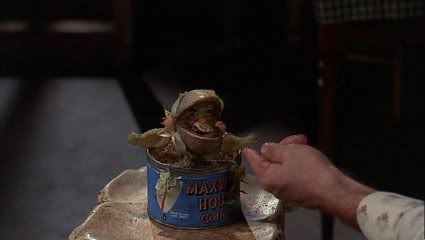
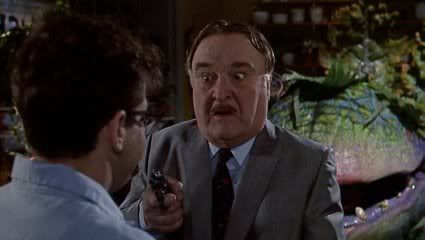
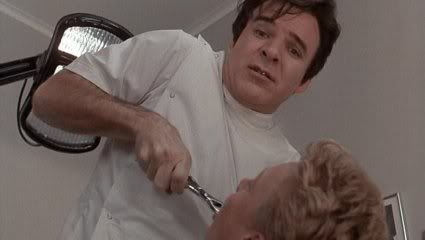
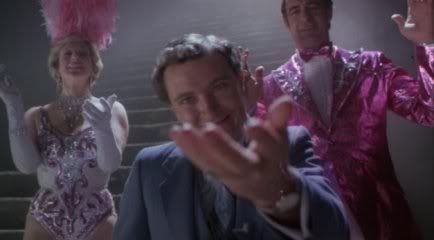
Which brings us to the final entry in our year-long series, which appropriately enough is centered around <I>Scrooged</I>, the 1988 fantasy-comedy that somehow got sidetracked on its way to becoming a perennial holiday classic. Oh sure, it still shows up on television year in and year out (most Christmas movies do, regardless of their age or quality), but you won't find any channel airing it for 24 hours straight the way TBS does with <I>A Christmas Story</I> (a tradition going back 14 straight years), and it certainly isn't accorded the respect that <I>It's a Wonderful Life</I>'s twice-yearly airings earn it (a far cry from its near-ubiquity back in the '80s before its copyright was reasserted). Regardless, it's about the only Christmas film that gets to me on a gut level in spite of the cloying sentimentality that periodically threatens to overwhelm the whole enterprise. Not that I want to be a total Scrooge about it, but this is one film that works a whole lot better when it isn't forcibly ramming holiday cheer down people's throats. And it could use a little less slapstick. Check, make that <I>a lot</I> less slapstick.</p>]]>
        <![CDATA[<p>My first clue that the version of <I>Scrooged</I> that made it into the multiplexes wasn't all it could have been was found in the liner notes of Danny Elfman's <I>Music for a Darkened Theater: Film and Television Music Volume One</I>, which was released in 1990. The compilation is made up of short suites (sometimes comprising only the title music) from his first dozen or so film scores (along with the theme songs for <I>The Simpsons</I> and <I>Tales from the Crypt</I>), but Elfman reserves the longest section (close to nine minutes) for <I>Scrooged</I>, which to my knowledge has never been released in any other form. Some of Elfman's notes are short and to the point (on <I>Back to School</I>'s cheerful "Study Montage": "Silly piece of music but I'm still fond of it.") while others are short and diplomatic (regarding the little-loved Bobcat Goldthwait talking-horse comedy <I>Hot to Trot</I>: "I never pass up the opportunity to write for accordions."), but there's only one case where he really sounds regretful. Here's what he had to say about working on <I>Scrooged</I>:</p>

<p><BLOCKQUOTE><I>"The original tone of this film, as you can hear in the music, was much darker than what ended up on screen. Although the score was a pleasure to write, it was pretty much buried in the final film. Another one of 'life's bitter pills'...Oh well."</I></BLOCKQUOTE>Tantalizing. Clearly, what <I>Scrooged</I> needs is an in-depth, book-length expose along the lines of <I>The Devil's Candy</I> or <I>Losing the Light</I> (about the making of <I>The Bonfire of the Vanities</I> and <I>The Adventures of Baron Munchausen</I>, respectively). Instead it barely gets two pages in Dennis Perrin's <I>Mr. Mike: The Life and Work of Michael O'Donoghue</I>, which is disappointing because it seems like Perrin could have dug a lot deeper than he did. If there's any one project that could have defined O'Donoghue's post-<I>Saturday Night Live</I> career, then <I>Scrooged</I>, which he co-wrote with frequent writing partner Mitch Glazer, was it.<br />
 <br />
The film starts off well enough with Elfman's title music over a shot of the clouds as the camera swoops down over Santa's Workshop, which soon comes under attack from black-clad goons with machine guns. Faster than you can say, "It's Lee Majors!" we find out we're watching a promo for a TV-movie called <I>The Night the Reindeer Died</I>, which gives way to spots for <I>Bob Goulet's Old Fashioned Cajun Christmas</I> and, somewhat incongruously, <I>Father Loves Beaver</I>. ("If I know your father, he's out chasing Beaver.") All of these programs are airing on Christmas Eve on IBC, a network run by Frank Cross (Bill Murray), the youngest president in the history of television (as he likes to point out to his underlings), but he's most concerned with the live broadcast of <I>Scrooge</I> which he has staked his reputation on and has devised an apocalyptic TV spot for. This disturbs his programming directors, but only one, a timid executive named Eliot Loudermilk (annoying played by Bobcat Goldthwait substituting for Sam Kinison, who would have been much more interesting in the role), voices his concerns about it ("That thing looked like <I>The Manson Family Christmas Special</I>."), which is enough to get him sacked on the spot. Thus begins Eliot's swift descent into his own personal hell (one where he becomes a raging alcoholic seemingly without being able to take a single drink), which is mirrored by Cross's fall from grace (a process that, it turned out, took a bit longer).<br />
<IMG SRC="http://i799.photobucket.com/albums/yy272/craigjoeproject/20michael.jpg"><br />
Speaking of Grace, that's the name of Cross's personal secretary (Alfre Woodard), who gets to play the Bob Cratchit role, and her young son, who hasn't spoken since his father died, is the Tiny Tim equivalent (so you know as soon as you meet him what his one and only line is going to be). In short order the film also introduces us to Cross's slightly loopy boss (Robert Mitchum), who's concerned about reaching the underserved pet market; the slick Hollywood hotshot (John Glover), who is rightly seen by Cross as a threat; and his former boss (John Forsythe), who returns in zombie form to tell him about the three ghosts that will be visiting him to show him the error of his ways. Of course, it's not enough for Cross to turn over a new leaf, he also has to reconnect with the kindhearted social worker he dated in the late '60s (Karen Allen) and who left him because he valued his career over their relationship. This is all well and good, and setting the story within the milieu of network television (which O'Donoghue was well versed in thanks to his years in the trenches at <I>SNL</I> -- it's easy to see why the brunt of his ire is directed at an embattled lady from Standards and Practices) was an inspired choice. Then the movie has to bring on the ghosts and, well, the results just aren't pretty.<br />
 <br />
If you ask me, David Johansen and Carol Kane nearly sink the film as the Ghosts of Christmas Past and Present, respectively. Johansen mugs terribly as a no-nonsense cabbie who drives Cross around, showing him scenes from his childhood (during which his gruff father is played by Murray's older brother, Brian Doyle-Murray), his early years at IBC, his meet-cute with Allen and their subsequent break-up. In contrast, Kane is shrill and giggly and dressed like the Sugar Plum Fairy, which is supposed to make it funny that she beats the living shit out of him, but the schtick gets tiresome fast and the scenes she shows him -- of Woodard's poor but joyful family and his younger brother's (John Murray) holiday gathering, which he was invited to but of course declined -- don't really make up for it. After that the stage is set for the Ghost of Christmas Yet To Come to redeem things somewhat. This is by far (and by necessity) the darkest part of the film and there's no overacting going on to distract from how disturbing the imagery is. The scene I'm most taken with in this section is Allen's transformation into a self-centered socialite, but they're all chilling in their own ways and they do the trick. When Frank Cross returns to the real world he's a changed man. Unfortunately he's also completely bonkers -- or at least that's how Murray plays him.<br />
 <br />
According to Perrin, Murray wanted "a big acting moment" for the scene where he teams up with a shotgun-toting Eliot to hijack the live broadcast so he can announce to the world that he's a changed man. At this point it's worth quoting from Roger Ebert's scathing one-star review:</p>

<p><BLOCKQUOTE><I>This sequence is the strangest in the film. The words are there, but the heart is lacking. Murray stands center stage and rants and raves about the spirit of Christmas, but it's not an inspiring speech and certainly not a funny one. It sounds more desperate than anything else, and it continues at embarrassing length. It looks like an on-screen breakdown.<br />
 <br />
Finally, he demands a miracle, and his secretary's little tyke is dragged forward to demonstrate that he can actually speak at last. Then the entire cast and crew line up behind Murray to sing of Christmas cheer, and I can't remember when I've seen anything along these lines that was more forced and depressing.</I></BLOCKQUOTE>Interestingly enough, a breakdown is exactly what screenwriter Mitch Glazer thought Murray was having while he watched the scene being filmed from the sidelines. For his part, O'Donoghue's response was more acerbic. "What was <I>that</I>? The Jim Jones Hour?" he said, a remark that earned him a punch in the arm from director Richard Donner. A perfect encapsulation of the screenwriter-director relationship in Hollywood, perhaps?<br />
 <br />
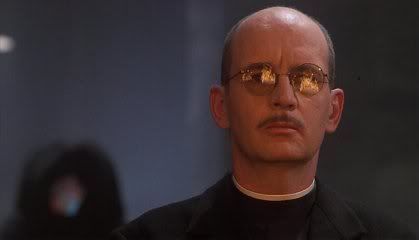
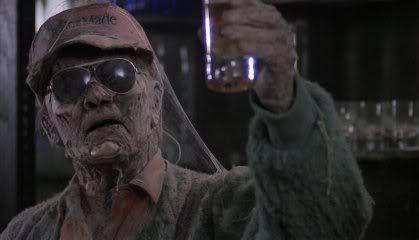
As <I>Scrooged</I> limps to a close, there's a bizarre <I>Return of the Jedi</I> moment where Cross spies all of the ghosts who have visited him -- including a homeless bum played by Michael J. Pollard who froze to death because Cross refused to give him a handout -- off in the corner of the studio, full of good cheer. Even the tortured souls in the Ghost of Christmas Yet To Come's ribcage have candy canes! (I doubt these rubbery creatures were what earned the film its lone Oscar nomination, which was for makeup. Rather, I suspect Forsythe's much more impressive appearance is what prompted it.) Probably not the ending O'Donoghue (who cameos as a priest in the scene where Cross is shown his own cremation) was hoping for for his only big-budget Hollywood film, but you have to keep in mind that this was a man who gained some measure of notoriety on <I>Saturday Night Live</I> by doing his patented impression of celebrities having nine-inch steel needles plunged into their eyes. After that, merely threatening to staple antlers onto mice was always going to be a step down.<br />
<IMG SRC="http://i799.photobucket.com/albums/yy272/craigjoeproject/20odonoghue.jpg"><br />
And here we are, my brothers and sisters, at the end of this year-long look back at the films of the 1980s. Maybe if we'd taken a cue from the AV Club and called it <i>Our Year of Eighties</i> we might have gotten a book deal out of it. Who knows what we may have encountered on the road not taken? Despite what the <i>Back to the Future</i> films have been telling you (and did you know that we totally covered one of those?), you simply cannot change the past. You may regret decisions you've made in days gone by, those unfortunate times when you zigged when the situation clearly called for zagging, but what's done is done. The best you can hope to do is learn from past mistakes and make the most of the time you have left on this earth. There is, conveniently enough, a movie which beautifully illustrates this theme. It is called <i>Remains of the Day</I> and stars Anthony Hopkins and Emma Thompson. You can probably have it instantly streamed to your phone or however it is that people watch movies these days. Perhaps by the time your read this article, it will be possible to transmit movies directly to your cerebral cortex. (Oh, god, think of what Madison Ave. could do with that!)<br />
 <br />
But that theme is also at the heart of <i>Scrooged</i>, Richard Donner's garish, disorganized and yet (occasionally) quite funny 1988 variation on Dickens's immortal <i>A Christmas Carol</i>. Now, I tell you this in the strictest confidence, reader, but it just so happens that I am something of a <i>Christmas Carol</i> fetishist. No, no, I don't have impure thoughts involving plum pudding or fantasies about being tied up by Emily Cratchit or anything like that. I simply mean that I derive an inordinate amount of pleasure from seeing filmed adaptations of <i>A Christmas Carol</i> -- good, bad, and indifferent -- and I have a whole list of specific plot elements which I strongly prefer to see included rather than left on the cutting room floor. Nothing "harshes my mellow," so to speak, more than a <i>Christmas Carol</i> remake which skips over, let's say, the appearance of Ignorance & Want from underneath the robe of the Ghost of Christmas Present. (As a point in its favor, let me say that the recent Jim Carrey version included, hands down, the most elaborate Ignorance & Want scene in movie history.) But even as a fetishist of all things Scrooge-ean, I know enough to cut some slack to Dickens derivatives set in the modern day. I know that in updated parody versions like <i>Scrooged</i>, we're just going to get the broad outlines of the familiar yarn: three ghosts visit a rich miser on Christmas Eve and show him the error of his ways. Sometimes we don't even get that much. In Stan Freberg's controversial 1958 "audio theater" piece called "Green Chri$tma$," the Scrooge character (an advertising executive, natch) doesn't learn his lesson or find redemption at all. Kindly Bob Cratchit glumly accepts defeat in the face of crass commercialism, and the whole record climaxes with an orchestral rendition of "Jingle Bells" obscenely punctuated with cash register noises.<br />
 <br />
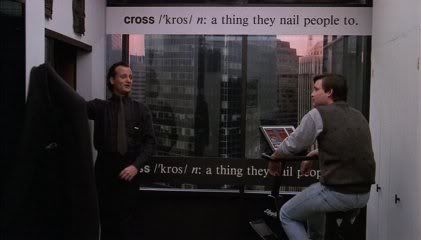
Donner's version of the Dickens tale is quite a bit more forgiving than Freberg's. This being a major studio holiday release, our Scrooge-like protagonist, TV executive Frank Cross (as in "a thing they nail people to"), does see the light by the end of the movie and positively radiates warmth, charity, and goodwill towards men by the time we reach the end credits. In short order, Frank rehires poor Bobcat Goldthwait, rekindles his love affair with doe-eyed do-gooder Karen Allen, and even magically cures Alfre Woodard's son's post-traumatic stress disorder. The good news is that Frank Cross is played by Bill Murray, so we know that even <i>he</i> isn't buying this miraculous transformation. I'm glad Craig brought up Roger Ebert's review of <i>Scrooged</i> because it contains this fascinatingly tone-deaf assessment of Murray's performance:<br />
 <br />
<blockquote><I>He's often gruff in his movies, but in a way that lets you know he's just kidding. This time, he doesn't seem to be kidding ... When he shouts at people, he doesn't add a little spin of self-mocking exaggeration, so that we know to laugh. He seems to be really shouting. And the other actors look as if they really feel shouted at.</I></blockquote>I'm not exactly sure which film Mr. Ebert saw, but it doesn't seem to be the same <i>Scrooged</i> I just watched, in which Frank Cross is such an inveterate wiseacre that we never for a second take him seriously as a soulless corporate villain. If anything, Murray doesn't play the part cruelly <i>enough</i> in the early stages. He doesn't approach <i>Scrooged</i> much differently than he did <i>Stripes</i> or <i>Ghostbusters</i>. We are constantly told that Frank Cross became a network president by working relentlessly and shutting off friends, lovers, and relatives in pursuit of wealth and status, but somehow I never bought it. Frank comes off like such a typical Murray knucklehead, completely ruled by his impulses, smirking at the world, that he hardly seems to have the attention span and laser focus you would need to become a successful television executive. Note how much different Murray's demeanor is from both the old guard (represented by Robert Mitchum and John Forsythe) and the young turks (represented by John Glover). As we'd expect from a Bill Murray movie, Frank is the lone wisecracking kook in a world of suck-ups, stiffs, and stuffed shirts. From my vantage point, Murray behaves pretty much the same way before and after his supposed metamorphosis. The film labors mightily to tug on our heartstrings, what with the traumatized boy who won't speak and the kindly old bum who freezes to death in a sewer (shades of a <i>Groundhog Day</i> subplot?), but Murray seems much more invested in being the consummate class clown. "So much for pathos," as they say on <i>Monty Python</i>. But, again, this isn't a huge problem because we don't watch <i>Scrooged</i> to see a heartless miser learn a lesson; we watch to see Bill Murray do that Bill Murray thing. By the film's very end, Murray seems to have given up on the plot entirely and is quoting <i>Little Shop of Horrors</i> (another film we totally covered) and leading the audience -- the <i>movie</i> audience! -- in a singalong. Murray's film-ending monologue/rant/breakdown may not function as a plausible conclusion to the story -- it far exceeds the limits of plausibility -- but it's a pretty neat performance showcase for the film's star and may actually work better out of context.<br />
<IMG SRC="http://i799.photobucket.com/albums/yy272/craigjoeproject/20bill.jpg"><br />
For me, <i>Scrooged</i> functions best as a grab bag of rowdy, fast-paced, occasionally rude <i>SNL</i>-style humor, a surprising amount of it successful. Being a 1980s Bill Murray character (setting aside the one he played in <i>The Razor's Edge</i>), Frank Cross is a motormouthed quip machine, and the script generously supplies him with plenty of good lines. There is malicious joy in Murray's voice when Frank lashes out during a board meeting and exclaims, "Now I have to kill all of you!" Ditto when he gives this none-too-inspiring preshow pep talk: "Break a leg, everybody! I feel real weird about tonight." No matter how often we're told that Frank is miserable, it's impossible to believe he's not enjoying these moments just a little. Maybe my favorite scene in the film is the one which has Frank going over his Christmas list with his long-suffering assistant, Grace, and deciding who gets a VCR and who gets a towel. (How delightful to know that Colonel Tom Parker only merits a towel.) In the credit-where-credit-is-due department: Bill's gruff-voiced brother, Brian Doyle-Murray, shines in a flashback scene as little Frank's humorless dad, who gives his son the ultimate Christmas present -- five pounds of veal. And then there is the film's treasure-trove of inside showbiz humor. Hollywood has always been especially adept at mocking its own crassness and shamelessness, and the flashes of tasteless IBC programming we see during the film are a testament to just how low the entertainment industry will sink in its relentless quest for viewers and money. A key element of this type of humor is finding past-their-prime celebrities willing to essentially act as human punchlines, and boy has this film got 'em! I noted with glee that the cast included at least three erstwhile <i>Gong Show</i> regulars: Mabel King, Pat McCormack, and Jamie Farr. If only they could have tracked down Jaye P. Morgan! Meanwhile, the brief Robert Goulet scene caused me to wonder: how much of his life did Mr. Goulet spend parodying himself? My guess: more than he'd planned.<br />
 <br />
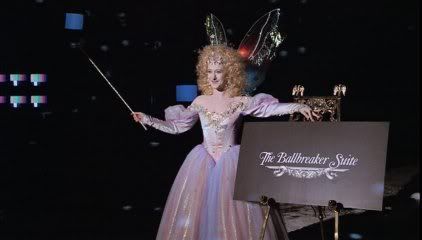
I'm disappointed that Craig was put off by the film's slapstick elements. I more or less delighted in them. I tend to love what Carol Kane calls "the rough stuff" (in comedy if not in life), and I was especially pleased by the fact that not one but two <i>women</i> are participants in the film's slapstick humor, not only Ms. Kane but also Kate McGregor-Stewart as the hapless network censor. Even today, unless they're playing cutely clumsy heroines in romantic comedies, women rarely get to take part in physical humor on screen, so it's a special treat to see them on both the giving and receiving ends of the equation in <i>Scrooged</i>. On the giving side, we have Carol Kane as the Ghost of Christmas Present. Craig says her performance nearly sinks the film, but I distinctly remember that when <I>Scrooged</i> was in theaters (my family and I were among those opening weekend ticket buyers), Kane's extended cameo received an inordinate amount of acclaim and attention. What makes her character, the cheerfully violent Ghost of Christmas Present (notice how <i>Scrooged</i> reverses the traditional genders of the Past and Present ghosts) funny is that Kane plays the role as a dead-on spoof of Billie Burke as Glinda the Good Witch in <i>The Wizard of Oz</i>, even aping one of Burke's famous lines: "I'm a little muddled." That line about being "muddled" is key to both Burke's and Kane's characters. Go back and watch <i>The Wizard of Oz</i>, and you'll find that despite her sweetly confused demeanor, Burke is actually an instigator and a troublemaker, taunting the Wicked Witch and getting Dorothy in trouble in the process. What Kane does is take Glinda's passive aggression and turn it into <i>aggressive</i> aggression, i.e. hitting Bill Murray in the chin with a toaster while smiling vacantly. That's funny enough for me. On the receiving side, poor Kate McGregor-Stewart plays a snooty but hapless network censor who undergoes a Calvary-like gauntlet of physical injuries. Donner and crew must have (correctly) guessed that no one in the audience would mind seeing a censor get knocked around a little.<br />
 <br />
I cannot, however, defend ex-New York Doll David Johansen's shamelessly hammy performance as the Ghost of Christmas past. I just wanted him off the screen, fast. And I agree that twitchy, fidgety Bobcat Goldthwait is a complete misfire as Eliot Loudermilk, one of the film's <i>two</i> (by my count) Bob Cratchit figures. Craig would have preferred to see Sam Kinison in this role, but I think it cries out for Rick Moranis. Eliot, after all, is a nebbish who gets pushed too far and finally snaps. Aggressive, loud comedians like Goldthwait and Kinison are simply not believable as nebbishes, but Moranis fully embodies the type. Also, since it's so atypical for him, Moranis could possibly have wrung some laughs out of Loudermilk's violent spree towards the end of the film -- a decidedly unfunny sequence with noise and chaos replacing actual comedic ideas. Goldthwait's breakdown is not funny because it's not surprising. In every movie, he always seems to be a few seconds away from a breakdown.<br />
 <br />
<i>Scrooged</i> is marred by these casting problems, and the script is further hampered by a muddled timeline (confusingly, Frank apparently goes on with his daily life between visits from the ghosts), and an emphasis on simplistic homilies that no one in the cast or crew seems to truly believe. But I was not bored by <i>Scrooged</i>, and the film wisely does not overstay its welcome. In fact, I'd go so far as to name it the <b>second</b> best <i>Christmas Carol</i> adaptation of the 1980s -- behind, of course, the 1984 version with George C. Scott, coincidentally directed by <i>Clive</i> Donner (no relation). Once upon a time, it had been our intention to cover that film for this series on Unloosen, but our Christmas gift to the readers is that we ultimately decided against it.<br />
 <br />
P.S. - Craig, you said that <i>Scrooged</i> was the only Christmas film that hit you at a gut level. Now, you and I both know that there's a line from <i>Annie Hall</i> which makes an ideal rejoinder to that statement, but I won't use it. Consider that my Christmas gift to you.<br />
<IMG SRC="http://i799.photobucket.com/albums/yy272/craigjoeproject/20murray.jpg"><br />
<B>Up Next:</B> Nothing! Absolutely nothing!</p>]]>
    </content>
</entry>

<entry>
    <title>Purple Rain, reviewed by Joe Blevins and Craig J. Clark</title>
    <link rel="alternate" type="text/html" href="http://www.unloosen.com/thestuff/archives/2010/11/purple_rain_reviewed_by_joe_bl.html" />
    <id>tag:unloosen.com,2010://2.643</id>

    <published>2010-11-25T16:16:02Z</published>
    <updated>2010-11-25T18:39:05Z</updated>

    <summary> &quot;They finally even made a movie about it... Whenever anything important happens in America, they have to gold-plate it, like baby shoes.&quot; - STEPHEN KING, Carrie Is it still legal to discuss Prince on the internet? I&apos;m pretty sure...</summary>
    <author>
        <name>Joe Blevins and Craig J. Clark</name>
        <uri>http://www.unloosen.com/control/?__mode=view&amp;blog_id=2&amp;id=44</uri>
    </author>
    
        <category term="Movies" scheme="http://www.sixapart.com/ns/types#category" />
    
        <category term="Reviews" scheme="http://www.sixapart.com/ns/types#category" />
    
    <category term="craigandjoewatchmoviesyouveactuallyheardof" label="craig and joe watch movies you&apos;ve actually heard of" scheme="http://www.sixapart.com/ns/types#tag" />
    
    <content type="html" xml:lang="en" xml:base="http://unloosen.com/">
        <![CDATA[<p><IMG SRC="http://i799.photobucket.com/albums/yy272/craigjoeproject/19prince.jpg"><br />
<blockquote><i>"They finally even made a movie about it... Whenever anything important happens in America, they have to gold-plate it, like baby shoes."</i> - STEPHEN KING, <i>Carrie</i></blockquote><br />
Is it still legal to discuss Prince on the internet? I'm pretty sure His Purpleness issued a fatwa some months ago, strictly forbidding the general public from even invoking his holy name on the web. But we believe in taking chances here at Unloosen, so we are ignoring the fatwa and presenting you with this brave, defiant review of <i>Purple Rain</i>.<br />
 <br />
"The movie" is an important milestone in the lifespan of any pop cultural phenomenon, particularly in America. When some comedian or singer or TV show or toy gets really popular with "the young people," you can be sure "the movie" will be coming soon. After all, the young people are the ones buying the movie tickets for the most part, so Hollywood wants to give them movies about whatever the hell they're interested in this year or this month or this week. Preferably as soon as possible... you know, before they forget. You know how screwy these kids are. One week it's this thing, the next it's something else. Now, the pop cultural phenomenon in question doesn't necessarily <i>have to</i> vaporize a few fortnights later, but it just might. Really, if we are being very hard-nosed about these things, we will see that <I>A Hard Day's Night</i> and <i>Cool as Ice</i> were made for the exact same reason: to capitalize on a teenage fad. Some music act is hot, so let's get them in front of the cameras. Couple this with the fact that pretty much every singer dreams of being a movie star, and you know what you get? Lots of movies starring pop singers. In a weird way, these movies add a sort of permanence to what might otherwise have turned out to be ephemeral. That's why I started this article with that Stephen King quote. These movies really are like gold-plated baby shoes. Pop stars <i>might</i> fall off the charts and into obscurity in a few months, and they inevitably <i>will</i> age and evolve over time. But those movies never change. They're in the can forever, preserving the stars in amber as they were during their zeitgeist-capturing heydays.</p>]]>
        <![CDATA[<p>Of course, it always helps to diversify one's portfolio (so to speak) in the notoriously fickle business we call show. If a singer shows promise as an actor, he or she might have a whole second career going. Who'd have guessed country crooner Reba McEntire would be the star of a long-running sitcom, for instance? Out of some combination of vanity and stubbornness (both prerequisites for stardom, I might add), Madonna, Bob Dylan, Mick Jagger, and David Bowie have all flogged away at acting careers, to varying degrees of success over the years. And then there is the case of Prince Rogers Nelson, the scarily talented and often-just-scary Minneapolis R&B/rock musical genius whose public persona seems to be a combination of James Brown, Little Richard, Jimi Hendrix, and Captain Hook from <i>Peter Pan</i>. Prince was hardly a newbie by the time he got the go-ahead to do "the movie" in 1984. He'd been a successful recording artist since 1978, when he was only 20, and had already released such popular albums as <i>1999</i> and <i>Controversy</I> by that point. But <i>Purple Rain</i> was Prince's <i>Thriller</i> moment. The film and (especially) its hit soundtrack album (#1 for 24 weeks!) catapulted him from mere mega-stardom to super-ultra-mega-deluxe stardom. I was a little too young for all of it at the time. I'd have been eight when the R-rated flick came out, i.e. not really in the target demographic. Like everyone else who lived in America during the Reagan years, I certainly heard Prince's songs at the time and for years afterward. You couldn't really avoid these tunes when they were blaring from car stereos in all directions. But Prince had a distinctly "adult" vibe to his image and career, much more so than Michael or Bruce or Cyndi. Even Madonna wasn't as frankly and threateningly sexual as Prince was at the time. Just saying his name out loud seemed a little dirty to me. I wasn't really into rock music back in '84. It would take a couple of years -- and the discovery of nerd-friendly bands like Devo, Talking Heads, and They Might Be Giants -- to indoctrinate me into the world of rock.<br />
 <br />
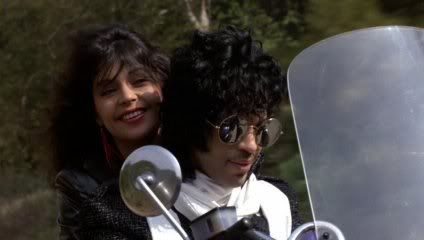
But a quarter century has passed, and it is now time for me to man up and face the <i>Rain</i>. It wasn't easy. To be honest, I was still a little afraid of it. The special edition DVD has, as you'd expect, a lurid purple cover. And there you'll find that iconic image of Prince in his <i>Seinfeld</i>-esque puffy shirt and purple top coat, straddling his obscenely purple motorcycle, as his leading lady Apollonia stands in a doorway at the top of some stairs in the background, looking like a vampire hooker. And there's fog everywhere! Citizens, I won't lie. It looks sleazy. I was more than a little embarrassed to be checking this thing out from the local library. I felt sure the old lady behind the counter was silently judging me.<br />
<IMG SRC="http://i799.photobucket.com/albums/yy272/craigjoeproject/19purple.jpg"><br />
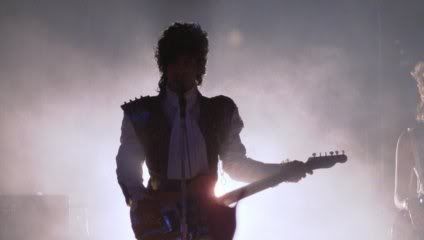
Despite these obstacles, I did manage to watch <i>Purple Rain</i> in preparation for this article. And you know what? The darned thing's not entirely bad, and if I squint I can almost see why it was an $80 million hit back when $80 million went further than it does now. As a delivery system for the Thing That Is Prince, <i>Purple Rain</i> more than gets the job done. You say want a tiny, androgynous man humping the stage in front of an appreciative Minneapolis audience? You got it, mister! He's on screen, I'd estimate, 80-90% of the time. And for most of that time, he's doing what he does best: singing and playing guitar on stage with his band, the Revolution (whose members portray themselves with varying levels of enthusiasm). At least three of the songs in this film -- the title track, "When Doves Cry," and "Let's Go Crazy" -- are among those inescapable, indelible Prince hits I mentioned earlier. They'll be with us forever. Someone's listening to those songs right now, I'll wager, playing air guitar and mouthing the words in front of a mirror. I don't know whether or not Prince would approve of that either. But, anyway, these songs are still astonishing and richly deserve their vaunted place in the pop culture pantheon.</p>

<p>Ironically, though, that's part of the reason that <i>Purple Rain</I> pretty much fails completely as a narrative. The film is supposed to tell the story of "The Kid," a very Prince-like aspiring musician on the Minneapolis club scene. Structurally, this means that <i>Purple Rain</i> closely resembles <i>8 Mile</I> with Eminem. Both films supposedly give us the gritty, unglamorous stories (tastefully fictionalized, of course) behind the careers of controversial pop stars. We see their early professional ups and downs in their respective local music scenes, plus plenty of ugly, unpleasant family and relationship drama on the side, too. And through all their tribulations and setbacks, these young men are guided by singular desire: to succeed. They know that music is their ticket to a better life, and they're not going to give up on their dreams. Okay, that's great. But somehow this seems a better fit for Eminem than it does for Prince. For one thing, Eminem's turbulent personal history has always been a key component to his music and has been very widely reported in the media. On the other hand, Prince has been extremely media shy throughout his career, and his lyrics don't function terribly well as an autobiography. So, really, who even knows or cares what Prince's backstory is? Secondly, Eminem has never been shy about presenting himself in a negative light on his albums, and in <i>8 Mile</i> we get to see his character, Rabbit, crash and burn as a rapper before finally succeeding. But Prince is too cool a customer for that. He is fully formed when he meet him, both in terms of his music and his fashion sense. He enters this movie on a motorcycle which matches his outfit, for God's sake! He seems more like a costumed superhero who fell to Earth from Planet Sexy than a mere mortal rock star. It's hard to take any of his problems too seriously. Prince is never anything other than Prince for even a second. Even when he's talking to policemen after his abusive father's suicide attempt (by gun) or when he's fantasizing his own suicide (by rope), he always seems like he's two seconds away from posing for an album cover. He's posing all the time. Throughout this movie, people occasionally tell "The Kid" that his music isn't going to catch on, but it's impossible to believe the naysayers because we know the truth. The soundtrack album was #1 for almost half a year, after all. These very songs were burned into America's brain. And we're supposed to believe this guy is struggling to make it? Come on! Who do you think you're fooling?</p>

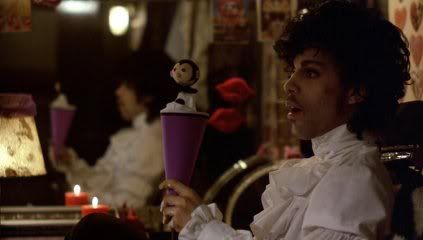
<p>Can Prince act? Frankly, I don't know. I've seen a whole movie in which he's the unquestioned star, and I still have no idea whether the man can act or not. What I can honestly say is that he <i>doesn't</i> act in this movie. It seems like a personal choice. He refuses to act. One of Prince's very rare television interviews was a famously stilted appearance he made on <I>American Bandstand</i> in the early 1980s. If you don't have time in your life to watch <i>Purple Rain</i> in its entirety, watch that <i>American Bandstand</i> clip instead because it basically gives you the whole "Prince acting" experience in a nutshell. At one point, Clark asked Prince how many instruments he played, and the young musician wordlessly held up four fingers as an answer. In this very movie, the members of his backing band, The Revolution, confront him at one point about being such a paranoid control freak and he responds to their complaints via a puppet. I'm not kidding.... a <i>puppet!</i> Where'd he get that puppet anyway? I'm surprised he didn't use it in all his other scenes, like the tacked-on, perfunctory romantic subplot. Yeah, "The Kid" has a supposed "romance" with fellow up-and-comer Apollonia, but their conversations largely consist of Prince barking terse, two-or-three-word orders at her. "Get on!" "Give me that!" "Let's go!" That's Prince the Silver Screen Lover. I guess there's some kind of point being made here, because we're supposed to see that The Kid has learned all the wrong lessons about how to treat a lady from his slap-happy musician pappy, but I found these scenes neither convincing nor terribly interesting or compelling.</p>

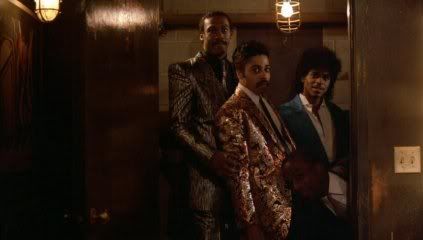
<p>I realize I've spent the last few paragraphs complaining about <i>Purple Rain</i>, but the truth is that I more or less liked the darned thing. The concert sequences are -- and I'm not ashamed to use this adjective when it's warranted -- electrifying. I have thus far neglected to mention the movie's flamboyant villain, Morris Day, who I guess is playing some fictionalized version of himself in this film. A rival funk bandleader who would have both the Minneapolis club scene and the heart of the fair Appolonia for his very own, Morris is a shameless schemer straight out of Saturday morning cartoons. In fact, he and his sidekick Jerome Benton (also apparently playing himself) reminded me quite a bit of Dick Dastardly and Muttley from <i>Wacky Races</i>. They're among the few characters in this film who seem to notice that <i>Purple Rain</i> is utterly ludicrous and don't even pretend to take it seriously. In retrospect, that was really the wisest approach all along.<br />
<IMG SRC="http://i799.photobucket.com/albums/yy272/craigjoeproject/19rain.jpg"><br />
In this series, Joe and I have touched on 20 films that were big in the '80s, either in our personal lives or in the culture at large -- and frequently both. (This entry, our 19th, covers film #21.) Along the way I've managed to introduce Joe to some films that he otherwise might not have seen, but the same cannot be said for me until now. This is not to say that I had a burning need to fill the <I>Purple Rain</I>-sized whole in my film education, but I have long been curious about the abbreviated acting career of the Artist Who Used To Formerly Be Known As Prince But Now Is Known As Prince Again. After all, <I>Purple Rain</I> was a big enough hit that it begat <I>Under the Cherry Moon</I> (which rather improbably provided Kirstin Scott Thomas with her big-screen debut), <I>Sign o' the Times</I> (his one true concert film) and <I>Graffiti Bridge</I>. Tellingly, all three of those follow-ups were directed by Prince (who also wrote <I>Sign</I> and <I>Graffiti</I> for good measure), but only the last one was an actual sequel to the film that, a quarter century later, remains his one true box-office success.<br />
 <br />
Even if I didn't see <I>Purple Rain</I> when it first came out (I turned 11 in 1984, so R-rated movies were still strictly off-limits to me), I was able to get the gist of it thanks to MTV's airing of the video for "When Doves Cry" in heavy rotation that summer. (I would provide a link to said video -- which perfectly encapsulates the themes and much of the imagery of the film -- but as Joe said Prince's people have been on a tireless crusade of late when it comes to expunging his material from the Internet. Unless, of course, it's the man himself trolling YouTube and other sites for fans/flagrant copyright violators to report. Based on his control-freak reputation, I actually wouldn't put that past him.) Coupled with my enthusiasm for the videos for "1999" and "Little Red Corvette," I was quite the budding Prince fan but somehow never got around to picking up any of his albums. Perhaps I knew instinctively that if I did there was a chance my mother would ask to listen to one and be scandalized by the likes of "Darling Nikki" (one of the songs that got Tipper Gore's dander up back in the day). Choosing the path of Hall & Oates and Huey Lewis and the News seemed much safer in comparison.<br />
 <br />
Then again, even with as many hits as they had, nobody to my knowledge ever asked Daryl, John or Huey (or anyone in the News for that matter) to star in a semi-fictionalized musical biography charting their trials and tribulations on the way to fame and fortune. (To see how such a thing can go horribly, horribly wrong, check out Mariah Carey's <I>Glitter</I> some time... or don't. Only you know how much your own time is worth to you.) More than likely the mere existence of MTV -- which gave bands the chance to make any of a number of three-minute films, biographical or otherwise -- obviated the need for the film industry to craft as many vehicles around the nascent personalities of up-and-coming rock-and-rollers as it had during the '60s boom. (Did you know Herman's Hermits starred in three motion pictures? Three!) Of course, by the time he starred in <I>Purple Rain</I>, Prince was well past the up-and-coming stage of his career, which is why the inevitable comparison with <I>A Hard Day's Night</I> is both apt and misleading at the same time.<br />
 <br />
Much has been written about the way <I>A Hard Day's Night</I> helped to define John, Paul, George and Ringo as individuals in the eyes of their fans (much as many aspects of Prince's public persona were cemented by his turn in <I>Purple Rain</I>), but the most important thing about their feature film debut was that it was most emphatically about the <I>present</I>, where Beatlemania already existed, and not the path that led to it. That story would be told on film many times in the decades to come, but it wouldn't star the Beatles. And while it's true that Prince is playing a character called "The Kid," which is how co-writer/director Alfred Magnoli tries to get away with the fiction that he's an unknown, struggling artist, it's hard to believe scenes like the one where he slays the crowd with the title song and then angrily stalks off the stage, somehow thinking that he's bombed, only to return triumphant moments later to sing the two closing numbers, "I Would Die 4 U" (which, as producer Robert Cavallo says on the commentary, feels somewhat perfunctory coming after the cathartic "Purple Rain") and "Baby I'm a Star" (which, in all honesty, was never really in question).<br />
<IMG SRC="http://i799.photobucket.com/albums/yy272/craigjoeproject/19revol.jpg"><br />
Since the live performances are the most electric scenes in the whole film, one wonders why Prince didn't simply go the concert film route -- &agrave; la Led Zeppelin's <I>The Song Remains the Same</I>, Frank Zappa's <I>Baby Snakes</I> or the Rolling Stones' <I>Let's Spend the Night Together</I> -- for his maiden cinematic voyage. Not only was his back catalog deep enough, but he could have easily filled out the evening with unreleased tracks from his vaults and still not broken a sweat. If he wanted to, he could have even kept The Time and Apollonia 6 as support acts, letting them come out and perform "Jungle Love" and "Sex Shooter" the way Talking Heads morph into Tom Tom Club for "Genius of Love" in the middle of <I>Stop Making Sense</I>. As it is, the film opens with The Revolution's blistering performance of "Let's Go Crazy," during which we're introduced to aspiring singer/dancer Apollonia skipping out on a taxi fare and taking a room at a sleazy hotel and Morris Day preening as he prepares for his grand entrance to the club. Then, after the briefest of pauses, The Time jumps straight into "Jungle Love," which unfortunately isn't allowed to play out completely because the film needs to follow Prince home on his motorcycle to look in on his abusive father and wayward mother. (It's almost surreal that his father's biggest complaint about his mother is that she doesn't clean often enough.)<br />
 <br />
What follows is a semi-coherent narrative made up of half-scenes and barely functional dialogue full of bald-faced exposition recited by musicians with little to no acting experience who are essentially playing thinly conceived variations on themselves. I'm not sure why Prince would want people to associate him with the character of The Kid, though, since he's kind of a dick. Take, for instance, the scene where he tricks Apollonia into removing all of her clothing and jumping into a freezing cold lake, then keeps scooting his motorcycle away from her whenever she tries to climb on. The Kid is also perpetually late for business meetings and band rehearsals and keeps putting off Wendy and Lisa, two members of his band with songwriting aspirations. (It's after Wendy calls him out on his paranoia, telling him, "You can really hurt people," that he performs his bizarre ventriloquist act.) Overall, though, he saves his worst behavior for Apollonia.<br />
 <br />
Apparently determined to top the incident at the lake, Magnoli and his co-writer William Blinn (a TV veteran who wrote <I>Brian's Song</I> and created the series <I>Starsky and Hutch</I>, among other things) draft a scenario where Apollonia -- who, remember, is an unknown who has to stay at a seedy dive because it's the only place she can afford -- pawns her anklet so she can buy The Kid a guitar (which he seems genuinely surprised to get, like it's Christmas morning or something). Then, when she casually announces that she's joining Morris Day's girl group, he belts her one (a real "I learned it by watching you" PSA moment) and then immediately switches gears, inexplicably asking her, "Don't I make you happy? Don't you like the way we are?" Yeah, Kid, I'm sure she's <I>thrilled</I> about getting slapped around by you simply because she wants to have a career of her own. He won't even leave her alone when he's onstage, causing her to burst into tears with the masturbation anthem "Darling Nikki" (which doesn't seem too far removed from her own group's "Sex Shooter" when you get right down to it). Odd, then, that that's the song that inspires the none-too-imposing club owner to tell The Kid, "Your music makes sense to no one but yourself."<br />
 <br />
The crux of the matter, psychologically speaking, is The Kid's contentious relationship with his father, a brilliant pianist/composer with anger management issues. I don't know how much of that correlates to Prince's actual family history, and frankly I don't want to know, but I doubt he ever confronted his own father by saying, "I saw Mom up the street. She looked pretty bad. Any idea how she got that way?" That's the sort of line that only rings true to a screenwriter with a tin ear for dialogue. <I>Purple Rain</I> is much better off when it lets Prince's music speak for him.<br />
<IMG SRC="http://i799.photobucket.com/albums/yy272/craigjoeproject/19ution.jpg"><br />
<B>Up Next:</B> Our series concludes with an unexpectedly quasi-sentimental dose of holiday cheer -- unless my library manages to Scrooge me out of it.</p>]]>
    </content>
</entry>

<entry>
    <title>The Fly, reviewed by Craig J. Clark and Joe Blevins</title>
    <link rel="alternate" type="text/html" href="http://www.unloosen.com/thestuff/archives/2010/10/the_fly_reviewed_by_craig_j_cl.html" />
    <id>tag:unloosen.com,2010://2.642</id>

    <published>2010-10-28T10:45:08Z</published>
    <updated>2010-12-16T22:47:39Z</updated>

    <summary> &quot;Is this a romance we&apos;re having? Is that what it is?&quot; - SETH BRUNDLE, a brilliant but socially awkward scientist who&apos;s working on something that will change the world and human life as we know it Mainstream horror cinema...</summary>
    <author>
        <name>Craig J. Clark and Joe Blevins</name>
        <uri>http://www.unloosen.com/control/?__mode=view&amp;blog_id=2&amp;id=45</uri>
    </author>
    
        <category term="Movies" scheme="http://www.sixapart.com/ns/types#category" />
    
        <category term="Reviews" scheme="http://www.sixapart.com/ns/types#category" />
    
    <category term="craigandjoewatchmoviesyouveactuallyheardof" label="craig and joe watch movies you&apos;ve actually heard of" scheme="http://www.sixapart.com/ns/types#tag" />
    
    <content type="html" xml:lang="en" xml:base="http://unloosen.com/">
        <![CDATA[<p><IMG SRC="http://i799.photobucket.com/albums/yy272/craigjoeproject/18goldblum.jpg"><br />
<blockquote><i>"Is this a romance we're having? Is that what it is?"</i> - SETH BRUNDLE, a brilliant but socially awkward scientist who's working on something that will change the world and human life as we know it</blockquote><br />
Mainstream horror cinema was in a bad way in the mid-'80s. Following the boffo box office of <I>Halloween</I> in 1978 and especially <I>Friday the 13th</I> in 1980, theaters (and video store shelves) were soon glutted with imitation slasher flicks about masked maniacs stalking frequently unclothed young women and hacking them to pieces with assorted kitchen utensils and gardening tools. This is, of course, not to forget the innumerable sequels these films engendered, few of which existed for anything other than mercenary reasons. This trend was also occasioned by a veritable race to the bottom with makeup artists of all skill levels competing to see who could devise the most nauseating gore effects which, more often than not, had to get cut back significantly in order for the films in which they appeared to get the all-important "R" rating. (This was well before the vogue for "unrated" video releases, so if something didn't cut the muster with the MPAA it generally wouldn't get seen outside of the grindhouses and urban markets.)<br />
 <br />
This is, of course, not to suggest that all was doom and gloom. Discriminating horror fans who dug a little deeper were rewarded with the occasional gem, and there were certain directors who could be counted on to deliver the genre goods while still treating their subjects with a certain amount of intelligence. One such director was Canadian auteur David Cronenberg, who had started making a name for himself a decade earlier with a low-budget film called <I>Shivers</I>, which was renamed <I>They Came from Within</I> when it was released in the States and caused a stir among horror aficionados. Over the next few years he followed it with <I>Rabid</I> (the legitimate acting debut of <I>Behind the Green Door</I> star Marilyn Chambers), <I>The Brood</I> (which was identified as a cult movie by no less an authority than Danny Peary) and <I>Scanners</I> (which was his commercial breakthrough in the American market). Being number one at the box office for one weekend (as <I>Scanners</I> was) brought Cronenberg to the attention of Hollywood and thus began the process of introducing his work to a wider audience. Of course, a major part of that would involve downplaying the extreme imagery (like the phallic organ in Chambers's armpit in <I>Rabid</I> or the exploding head in <I>Scanners</I>) that punctuated Cronenberg's films. What appealed to the <I>Fangoria</I> crowd wouldn't necessarily fly with general audiences -- not without some help.</p>]]>
        <![CDATA[<p>The first fruits of the uneasy alliance between Cronenberg and Hollywood came in form of <I>Videodrome</I>, which was co-financed by Universal. I'm not sure how Cronenberg was able to sell the studio on the concept, but the resulting film would have probably been the most appallingly violent thing they put out at the time if it hadn't been for John Carpenter's remake of <I>The Thing</I>, which had come out the summer before. (An interesting side note: the Criterion edition of <I>Videodrome</I> features a roundtable discussion from 1982 with Cronenberg, Carpenter and John Landis, whose <I>An American Werewolf in London</I> was released by Universal the year before. It's hard to think of a more disparate group of directors all working under the same umbrella, but the early '80s was a strange time for studio filmmaking.) Even with the backing of a major studio (which Cronenberg hadn't had when <I>The Brood</I> was shorn of one of its more grotesque moments a few years earlier), <I>Videodrome</I> suffered some MPAA-mandated cuts, not just for its violence but also for its sexual content, which had never really been an issue with Cronenberg's films up to that point. (Not even <I>Rabid</I>, which, for a film with an ex-porn star in the lead, is remarkably chaste.)<br />
 <br />
As if in response to <I>Videodrome</I>'s poor reception (like a lot of Cronenberg's films, it's gone on to have a cult following, but at the time of its release it was a box office dud), the director's next film was a much more commercial prospect all around. Based on a novel by Stephen King, <I>The Dead Zone</I> not only dialed way back on the blood and gore that Cronenberg was known for, but it also featured the first realistically rendered romantic coupling (between Christopher Walken and Brooke Adams) in one of his films. (In contrast, the sex scenes between <I>Videodrome</I>'s James Woods and Deborah Harry are anything <I>but</I> romantic.) Then, following a lengthy detour where he worked on a version of <I>Total Recall</I> for producer Dino De Laurentiis that was ultimately abandoned over "creative differences" (Cronenberg wanted to be creative, De Laurentiis apparently did not), he was offered the film that finally consummated his flirtation with the mainstream: the 1986 remake of <I>The Fly</I>.<br />
 <br />
Over the course of this year-long project, Joe and I have tried to tackle a variety of styles and genres, from <A HREF="http://www.unloosen.com/thestuff/archives/2010/02/the_elephant_man_reviewed_by_j.html">high-toned art-house fare</A> to <A HREF="http://www.unloosen.com/thestuff/archives/2010/07/top_secret_reviewed_by_craig_j.html">knockabout farces</A>, from <A HREF="http://www.unloosen.com/thestuff/archives/2010/03/superman_iii_reviewed_by_craig.html">superhero sequels</A> to <A HREF="http://www.unloosen.com/thestuff/archives/2010/05/shock_treatment_reviewed_by_jo.html">would-be cult movies</A>, from <A HREF="http://www.unloosen.com/thestuff/archives/2010/01/explorers_reviewed_by_craig_j.html">films aimed at children</A> to <A HREF="http://www.unloosen.com/thestuff/archives/2010/06/down_and_out_in_beverly_hills.html">decidedly more adult entertainment</A>. And in terms of the filmmakers, we've tried to cast our net wide, covering everyone from Robert Zemeckis to the Chiodo Brothers and from John Hughes to Steven Spielberg. Even so, we've managed to repeat ourselves, touching on multiple films by Zucker-Abrahams-Zucker (<I>Ruthless People</I> and <I>Top Secret!</I>) and Frank Oz (<I>The Muppets Take Manhattan</I> and <I>Little Shop of Horrors</I>). And now we're taking on our second film (after <I>The Elephant Man</I>) from Mel Brooks's Brooksfilms, which worked hard to differentiate itself from the popular director's own output (which would have also been worth exploring even if the '80s weren't as kind to Brooks as they might have been).<br />
 <br />
If Mel Brooks and David Cronenberg seem unlikely bedfellows, they're no stranger than Brooks and David Lynch, whose earlier collaboration resulted in critical acclaim, multiple Oscar nominations (including Best Picture and Best Director) and Lynch's emergence from the underground which had nurtured him for many years into the realm of commercial filmmaking. Admittedly, Cronenberg didn't have as much of a leap to make in that regard and <I>The Fly</I> only received one Academy Award nomination, but unlike <I>The Elephant Man</I> (which went 0 for 8), it won the Oscar for Chris Walas's groundbreaking makeup effects. That Jeff Goldblum -- the man who had to endure most of them <I>and</I> give a credible performance as an emotionally stunted scientist-turned-gradually evolving genetic mutation -- didn't take home Best Actor (let alone even get nominated) is a travesty. (His Saturn Award -- given out by the Academy of Science Fiction, Fantasy & Horror Films -- was a small consolation considering it was given to Jack Nicholson for his over-the-top turn in <I>The Witches of Eastwick</I> the following year.)<br />
<IMG SRC="http://i799.photobucket.com/albums/yy272/craigjoeproject/18davis.jpg"><br />
In the acting department, Geena Davis matches Goldblum every step of the way as Veronica Quaife, the ambitious science journalist who sees the potential in his pioneering teleportation work first (she wants to write a book about it) and their potential as a couple second. (They were a couple in real life by this time as well, having met while making the utterly forgettable monster comedy <I>Transylvania 6-5000</I>, which was written and directed by erstwhile Mel Brooks collaborator Rudy De Luca.) The only other major character is Veronica's editor/slimy ex-boyfriend Stathis Borans (notice how he shares the same initials as Seth Brundle) who's indelibly played by John Getz (currently appearing on multiplex screens nationwide as Mark Zuckerberg's lawyer in <I>The Social Network</I>). Cronenberg and Getz walk a fine line with Stathis since they don't even attempt to make him likable, yet he never comes off as an outright villain, either. If this were an ordinary domestic drama, he would play the part exactly the same (although his line "I don't want you to disappear from my line" carries extra resonance in a story about the dangers of being teleported from one place to another). The only difference is he probably wouldn't sit by screaming while his hand and foot are dissolved by an acid-spewing half-man/half-insect creature. (It would be wrong to rule that out entirely.)<br />
 <br />
The screenplay -- which is credited to Cronenberg and original screenwriter Charles Edward Pogue even though it retains only a handful of Pogue's ideas (it was his idea for the fusion to be at the genetic level) and none of his dialogue or characters -- is a marvel of efficiency, introducing the situation swiftly and succinctly and packing in loads of quirky details about the protagonists (like Seth's pride in his espresso maker or Stathis's penchant for dropping by unannounced to use Veronica's shower because he "just happened to be in the neighborhood" and "felt a bit scummy"). It also allows them to rise to the level of their intelligence (which means they don't talk down to the audience or make dumb decisions just for the sake of moving the plot along) and maintain a sense of humor throughout. (Even as he's slowly turning into something hideous and unmistakably inhuman, Seth continues to make wry observations about the situation he finds himself in.) And Cronenberg gets to play up some of his pet themes, particularly about "the flesh," which may very well be related to <I>Videodrome</I>'s "New Flesh." This comes out in a big way after Seth has teleported himself (and a housefly, although he doesn't know that yet) and is outraged that Veronica refuses to follow in his footsteps:<br />
 <br />
<BLOCKQUOTE><I>You're afraid to dive into the plasma pool, aren't you? You're afraid to be destroyed and recreated, aren't you? I'll bet you think that you woke me up about the flesh, don't you? But you only know society's straight line about the flesh. You can't penetrate beyond society's sick, gray fear of the flesh. Drink deep or taste not the plasma spring! See what I'm saying? I'm not just talking about sex and penetration. I'm talking about penetration beyond the veil of the flesh -- a deep, penetrating dive into the plasma pool.</I></BLOCKQUOTE>With an invitation like that, who wouldn't want to take a dip?<br />
 <br />
Of course, it isn't long before Seth's physical condition deteriorates -- his face becomes blotchy and his fingernails start coming off, prompting him to don heavy gloves so he can continue typing confused queries into his computer -- and for the rest of the film (usually when Veronica drops by to check up on him since he has no other contacts with the outside world) we get to see him at various stages of his chilling metamorphosis. ("Every time I look in the mirror there's someone different, someone hideous, repulsive.") At one point hobbled to such a degree that he needs to use canes to get around, later on Seth discovers a talent for walking on the ceiling and walls ("I seem to be stricken by a disease with a purpose, wouldn't you say?") that brings back the strange euphoria he felt when he turned into a world-class gymnast overnight. The more Seth embraces his new body, though, the more it repulses Veronica. No wonder she freaks out when she discovers she's pregnant since she has no way of knowing whether the baby she's carrying was conceived before or after Seth teleported himself. This is the cue for what is probably the most upsetting scene in the film to female viewers, and the one that pointed the way to Cronenberg's next film, <I>Dead Ringers</I>, since he has a cameo as a gynecologist who helps Veronica deliver what turns out to be a squirmy, wriggling larva. This turns out to only be a nightmare, but it prompts Veronica to go to Stathis so he can pull some strings and get her an emergency abortion.<br />
 <br />
"I don't want it in my body," she cries and in many ways that sums up Cronenberg's unique brand of "body horror" that can be traced all the way back to his early, experimental features <I>Stereo</I> and <I>Crimes of the Future</I> (from 1969 and 1970, respectively). This time, though, we're not watching dispassionately as an academic type explains what's happening in voice over. Rather, we're right there on the front lines with the characters as they wrestle with their emotions -- even Seth, who has started calling himself Brundlefly, makes an impassioned plea for her to keep the baby because it may be the only human part of him left. (When was the last time you saw a monster movie morph into a sensitive abortion drama?) His insect side wins out, though, and he puts into motion one last teleportation experiment, hoping that the fusion of his DNA with Veronica's and their child's will result in a being that is decidedly more human than what he's turning into. ("We'll be the ultimate family," he quips, echoing his earlier argument that they would be "the perfect couple" if only she would let him send her through the teleporter.) In the end Brundlefly is thwarted by his romantic rival, Stathis, who turns out to be the film's unlikely hero, but at the cost of his foot and hand. Unsurprisingly, he's more than a little bitter about this in his one-scene cameo in the Cronenberg-less sequel, <I>The Fly II</I>, which was released in 1989 and proved that some scientific experiments just can't be replicated.<br />
 <br />
That said, it's no real surprise that -- with the help of his regular collaborator Howard Score, who composed the film's haunting score -- Cronenberg was able to turn <I>The Fly</I> into an opera (the premiere of which he directed in 2008). Even with its science-fiction trappings and monster-movie origins, it's still at its base a story about a love triangle that is only resolved when one of the lovers comes to a violent (and sadly necessary) end. But unlike <I>Little Shop of Horrors</I>, which went from film to stage musical then back to film, there's little chance that <I>The Fly</I> will be returning to the screen in its new form. That, I expect, would be one mutation too many.<br />
<IMG SRC="http://i799.photobucket.com/albums/yy272/craigjoeproject/18getz.jpg"><br />
Jeff Goldblum is one of those actors who works all the time (as he should; he's terrific), but his career leaves you to wonder how Hollywood keeps coming up with stuff for this guy to do. This is one seriously odd individual, possessing unmistakable physical and vocal tics that are perfect for impressionists. They don't even have to exaggerate. A quick YouTube search, for instance, brings up a clip called <i><a href="http://www.youtube.com/watch?v=qe1q_4d2IyM">Elon Gold interviewing Elon as Jeff Goldblum</a></i>, which as luck would have it actually incorporates some dialogue from this week's movie, <I>The Fly</i> ("Look at me! Let's go! Catch me if you can!") and pretty much covers all the Goldblum basics. Jeff speaks in an excited, rapid-fire manner but pauses at uncomfortable times, emphasizes unexpected words, and sometimes has to use "uh" as a placeholder when his mouth can't quite keep up with his mind. Plus he stares intently at you with those buggy eyes of his and seems to be smiling at some deeply private joke no one else could ever understand. You're never quite comfortable when you're talking to him. He throws your rhythm off somehow. If anything, he seems to try to <i>downplay</i> these tendencies in most of his "normal" acting. In interviews, though, he really lets loose. One need only venture as far as the supplemental materials on the exhaustive <i>Fly</i> special edition DVD to see some full-tilt Goldblum action. Film critic Jami Bernard deftly summarized the actor's demeanor in her book, <i>First Films</i>:<br />
 <br />
<blockquote><i>"Jeff Goldblum is so intense that when he first shakes your hand, he holds it just a beat too long, peering at you unblinking with those giant orbs, cocking his head as if trying to sniff you or lock into you through some astral frequency. His ears move sometimes when he talks, adding to the impression that Goldblum is possessed of psychic antennae, and although he can appear gangly on-screen, he is well built and powerfully kept."</i></blockquote>I include that paragraph because one could fairly easily take out Jeff Goldblum's name and substitute Seth Brundle's and it would still manifestly apply. Could it be that the doomed scientist of <i>The Fly</i> is the role which gets closest to the "real" Jeff Goldlbum? At the risk of sounding like an armchair psychologist, I'll say yes. Let's face it: even before he starts transforming into an increasingly yucky human-fly hybrid (flybrid?), Seth Brundle already seems like an extra-terrestrial, perhaps an amped-up first cousin to David Bowie's slumming alien Thomas Jerome Newton from <i>The Man Who Fell to Earth</i>. Notice that both Brundle and Newton are uncomfortable in cars and insist that whoever's driving go slowly. (Incidentally, I've heard the same thing about Stanley Kubrick. Makes you wonder, huh?) Furthermore, Brundle chooses as his pet a baboon, i.e. a dangerous creature which can definitely <i>not</i> be domesticated, takes his fashion cues from Albert Einstein, makes his home in a warehouse in a really crappy-looking neighborhood, and seems like a possible Asperger case when it comes to social interaction. Brundle seems to regard humanity and life itself with a kind of eerily distant fascination, the way we actually regard the insect world. We can study the insect world and ask all the relevant questions, but we'll never be able to "think" like an ant or a grasshopper. Or a fly.<br />
 <br />
One habit of Brundle's that continues throughout the movie is his penchant for posing questions aloud that most of us would just think. Craig started off this article with a good one: "Is this a romance?" Maybe not the best thing to ask your (likely first and only) girlfriend, but Brundle literally doesn't know. He's maybe heard of this "romance" thing, but he's not sure how it actually works. When that same girlfriend, ambitious reporter Veronica (Geena Davis), tells Brundle he's cute, he replies, "Am I?" In most cases, this would be coy, false modesty. But Brundle is genuinely, pleasantly surprised to hear the news. He honestly doesn't know what human women find cute. At this moment, Brundle is like someone who wins a contest he didn't even know he'd entered. When that pesky insect DNA starts running rampant and Brundle's health deteriorates: he asks his (none-too-promising) reflection in the mirror, "Am I dying? Is this how it starts?" This moment is partly a soliloquy, as Cronenberg's film is definitely a Tragedy with a capital T, but there's also some genuine scientific curiosity behind Brundle's words. He's of course horrified and saddened by his alarming decline into fly-dom, but the "scientist" part of his brain still finds it fascinating. I guess that's why, as he gets worse and worse, he stays pretty zen about his dismal situation and even takes pains to document his disgusting metamorphosis.<br />
<IMG SRC="http://i799.photobucket.com/albums/yy272/craigjoeproject/18the.jpg"><br />
That last scene I mentioned, the excruciating sequence with Brundle in front of the bathroom mirror, is painful to watch for two reasons. It's yucky, certainly. No denying that. But it's also emotionally devastating. That's the key to what makes <i>The Fly</i> such a powerful viewing experience. Cronenberg brought real <i>feeling</i> back to the horror film. He re-personalized a genre that was becoming less and less personal with each Jason or Freddy sequel. In a weird way, that makes <i>The Fly</i> a throwback to an earlier era. Go back to those old Universal horror flicks, and you know what you'll find? A lot of relationship drama -- parent/child relationships, of course, but romantic entanglements as well. The various and sundry vampires, werewolves, mad scientists, monsters, and invisible men who populate these films generally go through some heavy relationship problems during the course of their films. It's not just about the violence; it's about the <i>lives</i> that are affected. (Imagine being Dr. Frankenstein's fianc&eacute;e for a moment. That's a tough gig.) And, as Cronenberg points out in his DVD commentary, take all the sci-fi stuff about teleportation and DNA out of <i>The Fly</i> and you have the very human story of a woman who meets and falls in love with a man and watches in shock and horror as he succumbs to illness or addiction before finally begging to be put out of his misery. Without the sci-fi/horror trappings, this would be a profoundly unmarketable story. But that's what's so wonderful about these genres. They provide a commercial "safety net" which allows filmmakers like David Cronenberg the chance to try things that would be unheard of in, say, a straight drama.<br />
 <br />
Or at least ideally that's how it should work. This is the point in the article where I go into my obligatory, grouchy-old-man rant about "the rotten movies they're making nowadays." I seem to be doing that more and more, and I apologize for that, but I can't avoid the issue. One question that's been on my mind since we started this project is: "Are the movies of the 1980s <i>better than</i> the movies we're getting in 2010?" I'd have to say that in terms of mainstream American movies --  the kind released by major studios and shipped out to multiplexes across the country, the kind people really <i>see</i> -- the answer is generally yes. Movies were trying a lot harder in the '80s. The only way that movies have gotten more "ambitious" in the ensuing decades is in purely technical terms. The effects budgets keep getting bigger, but the <i>ideas</i> are smaller than ever. We're not getting intricately crafted farces like <i>Ruthless People</i>, bracing satires like <I>The Meaning of Life</i> or truly shattering tragedies like <i>The Fly</i>. We're aiming so low on the emotional and intellectual scales these days. It seems like the only directors who can do anything really meaningful or interesting "within the system" these days are those who have become trusted brand names in their own right and are allowed to flex some creative muscle. But those guys (generally) aren't making horror films in 2010, and we have to settle for the work of best-left-anonymous studio hacks. We have this genre with tremendous dramatic potential, and it's lying fallow. Someone write a Congressman!<br />
 <br />
Before you do that, though, go back and watch <i>The Fly</i> again, especially if you haven't seen it in a while. You'll laugh! (Like when Seth goes on a motormouthed tear at a coffee shop as an embarrassed Veronica looks on.) You'll gasp in surprise. (Oh, god, that arm wrestling scene!) You might even cry. (Especially during the film's grueling last half hour.) It's that kind of picture. It's no coincidence that I also brought up the classic Universal films when I discussed our last Brooksfilm production, <i>The Elephant Man</i> because in a weird way <i>Elephant</i> and <i>Fly</i> feel like companion pieces to me: a human soul trapped in an animal-like body. Mel Brooks used to aim for the rafters as both a director and a producer, culminating with <i>Young Frankenstein</i>, a movie which aims not only for laughs but for genuine emotion. By the end of a great Brooks flick, the audience should feel as if it's gone through a whole range of feelings. But somewhere around <i>Robin Hood: Men in Tights</i> Mel started thinking smaller and smaller, too, eventually making himself irrelevant. A pity.<br />
 <br />
But before all that unpleasantness happened, Mel ponied up the dough for this movie. May the Schwartz be with him for that, if nothing else. <i>The Fly</i> is a real Rorschach test of a movie. Could be about cancer. Some think it's about AIDS. Could be that old "tampering in God's domain" bit. (Horror films still aren't done with that one. Not by a damned sight. Wasn't <i>Splice</i> just a few months ago?) To me, the terrifying saga of Seth Brundle works best as a movie about drug addiction, most likely cocaine. Cronenberg mentions coke specifically on the commentary track. During that aforementioned scene in the coffeehouse, Seth adds spoonful after spoonful of sugar to his coffee and becomes a serious "junk food junkie" as the film progresses. Of course, flies like sugar and sweet stuff. But supposedly so do druggies. Having never really been close to the drug scene, I can only rely on what the movies have told me. Remember Jodie Foster as strung-out teen prostitute Iris in <I>Taxi Driver</i>? Well, there's a scene where she's in a cafe with Robert De Niro, having breakfast, and she puts a lot of jelly on her toast and then pours sugar on top of the jelly. According to <i>Taxi Driver</i> screenwriter Paul Schrader, that detail was taken directly from real-life observation. Junkies, like flies, dig sugar.<br />
 <br />
Good enough for me.<br />
<IMG SRC="http://i799.photobucket.com/albums/yy272/craigjoeproject/18fly.jpg"><br />
<b>Up Next:</b> The sad story of a fledgling perfume company which must close its doors and stop making scents. Or something like that.</p>]]>
    </content>
</entry>

<entry>
    <title>Little Shop of Horrors, reviewed by Joe Blevins and Craig J. Clark</title>
    <link rel="alternate" type="text/html" href="http://www.unloosen.com/thestuff/archives/2010/10/little_shop_of_horrors_reviewe.html" />
    <id>tag:unloosen.com,2010://2.641</id>

    <published>2010-10-15T22:45:13Z</published>
    <updated>2010-10-15T22:53:51Z</updated>

    <summary> &quot;Take a breath and look around. A lot of folks deserve to die.&quot; - AUDREY II, a carnivorous talking plant Time for a moral self-inventory. What would you do for money? Fame? Love? All three at once? Think it...</summary>
    <author>
        <name>Joe Blevins and Craig J. Clark</name>
        <uri>http://www.unloosen.com/control/?__mode=view&amp;blog_id=2&amp;id=44</uri>
    </author>
    
        <category term="Movies" scheme="http://www.sixapart.com/ns/types#category" />
    
        <category term="Reviews" scheme="http://www.sixapart.com/ns/types#category" />
    
    <category term="craigandjoewatchmoviesyouveactuallyheardof" label="craig and joe watch movies you&apos;ve actually heard of" scheme="http://www.sixapart.com/ns/types#tag" />
    
    <content type="html" xml:lang="en" xml:base="http://unloosen.com/">
        <![CDATA[<p><IMG SRC="http://i799.photobucket.com/albums/yy272/craigjoeproject/17little.jpg"><br />
<blockquote><i>"Take a breath and look around. A lot of folks deserve to die."</i> - AUDREY II, a carnivorous talking plant</blockquote><br />
Time for a moral self-inventory. What would you do for money? Fame? Love? All three at once? <i>Think it over.</i><br />
 <br />
Let's say you lived in misery and poverty and were mocked and rejected on pretty much a daily basis. No one but no one respected you. Pity? Maybe. But respect? No. Let's also say that you were desperately in love with a co-worker who remained sadly out of your reach despite being just a few tantalizing feet away from you each day. Now let's further imagine that you stumbled across a miraculous solution to all your problems, a solution which unfortunately required you to kill a few people. Would you do it? Would you start murdering people? And would you commit further murders to cover up your earlier ones? After all, people are bound to start asking nosy questions...<br />
 <br />
Legendary B-movie screenwriter Charles B. Griffith seemed to think that, under those particular circumstances, a person of weak character might just become a killer, especially if the first few murders were more or less accidental and if the "victims" were largely unsympathetic. So in 1959, he wrote a cheap but effective little horror-comedy called <i>A Bucket of Blood</i>, in which a simpleminded schlemiel of a busboy (played by Dick Miller) stumbles first into killing and then into overnight success as a sculptor when he turns the corpses of his victims into "statues" by coating them with plaster and passing them off as works of art. The very next year, that film's director, Roger Corman, needed a script <i>pronto</i> in order to take advantage of some standing sets, so Griffith churned out a wackier variation on <i>A Bucket of Blood</i>, amping up the comedic and satiric elements, adding an absurd supernatural threat (a talking killer plant), and generally aiming for a freewheeling sketch-comedy/comic book feel, complete with silly names, throwaway gags, and wacky background signs. The resulting film, <i>The Little Shop of Horrors</i>, told the strange story of klutzy flower shop employee named Seymour (<i>MST3K</i> stalwart Jonathan Haze) whose apparent ticket out of Skid Row was a bloodthirsty talking plant, Audrey, Jr., who demanded human victims. In a way, the carnivorous plant of <i>Little Shop</i> was an even better metaphor for the vicissitudes of fame than the "statues" of <i>Bucket of Blood</i>. A plant, like fame, can either grow or wilt and must constantly be fed and tended to. In any event, Corman and Griffith's <i>Little Shop</i> had a shadowy half-life in the 1960s as the bottom half of a double bill with Mario Bava's <i>Black Sunday</i> but went on to be a perennial favorite at campuses and revival houses in the ensuing decades. Such was the film's enduring popularity that in 1982 -- twenty-two long years after its initial, ignoble release -- it became an off-Broadway musical by composer Alan Menken and lyricist Howard Ashman.</p>]]>
        <![CDATA[<p>Nowadays, the idea of a stage musical based on an unlikely or semi-obscure movie, even a Grade-B horror film, is nothing special. In 2010, the American stage resembles nothing so much as a movie nerd's Netflix queue. Each year, dozens of such shows play here in Chicago, especially as we near Halloween. Back in '82, however, <I>Little Shop</i> was something of a freak occurrence. People weren't used to stage musicals based on faintly disreputable old movies. <i>Reefer Madness: The Musical</I> and its ilk were decades away. But Menken and Ashman's show had more than novelty appeal going for it. The songs were catchy and fun pastiches of early 1960s rock and soul, the staging incorporated some clever puppeteering, and the whole production had a spirit of infectious anarchy which set it apart from its off-Broadway competition. The show became an immediate hit, and a film version appeared inevitable. Originally, producer and music mogul David Geffen envisioned the film as a relatively inexpensive production, shot quickly for a few million bucks with Martin Scorsese (!?) directing. Somehow, though, the film morphed into an innovative and complicated $30-$40 million extravaganza shot on a huge soundstage at England's Pinewood Studios and helmed by the director of <I>The Muppets Take Manhattan.</i><br />
 <br />
That's where I come in. I count Frank Oz's 1986 film version of <i>Little Shop of Horrors</i> as one of the defining movie-going experiences of my young life. I saw it when I was 11, and it captured my imagination as no film since <I>Star Wars</i> had. This was the first time I can remember actively lobbying my parents to buy me the soundtrack album for a movie, and I listened to that cassette dozens of times, memorizing each song until I could mime the lyrics perfectly. (Interestingly, during the film's difficult and drawn-out production, Oz also repeatedly listened to a tape of the soundtrack in order to motivate himself to continue with the cash-sucking boondoggle <i>Little Shop</i> had become.) It is little wonder that I had never seen anything like <i>Little Shop</i> before then. The live-action musical did not exactly thrive during the 1980s. Movies as diverse as <i>Grease 2</i>, <i>Popeye</i>, and <i>Xanadu</i> had met with chilly box-office and critical receptions early in the decade, and the already-antiquated genre was well-nigh extinct by '86, though Ashman and Menken would help to revive the <i>animated</i> musical as a viable commodity a few years later with <i>The Little Mermaid</i>. About the only things <i>Little Shop</i> had going for it from a marketing standpoint were the well-publicized appearances of several "guest stars" (Steve Martin, Bill Murray, John Candy) -- a point which the film's trailers and TV ads hammer away at -- and the fact that Hollywood was going through a full-fledged nostalgia boom thanks to the success of films like <i>Back to the Future</i> and <i>Stand By Me</i>. Is it mere coincidence that the songs from the stage show which did <i>not</i> make it into the movie, including "Mushnik & Son," "Closed for Renovations," and "Now It's Just the Gas," were the ones which did not really fit the rock 'n' roll oldies template? It's debatable.<br />
 <br />
In the end, neither celebrity cameos nor Kennedy-era nostalgia helped the film much at the box office. Although given a prominent Christmastime release by Warner Brothers (angling perhaps for some Oscar nods), <i>Little Shop of Horrors</i> did not come close to turning a profit on its enormous initial investment during its rather brief theatrical run but made some of its money back on television and video. Like its Corman-directed ancestor, the would-be blockbuster instead became a cult favorite. If anything, the film helped raise the profile of the 1982 stage version and the 1960 original film. Community theater and high school productions of the former cropped up all over the country (there was even a storyline on the TV show <i>Head of the Class</i> in which the gifted students staged the play), while the latter -- having slipped into the public domain -- frequently turned up on local TV stations and was released countless times on VHS and DVD.<br />
 <br />
But what of that troubled, semi-neglected 1986 version, the nominal subject of this article? How does it hold up in 2010? In my opinion, brilliantly. For me, writing these articles generally involves watching each film several times through and reading up on the film's background, and rarely has that process been more enjoyable than with <i>Little Shop of Horrors</i>. I have also used this as an opportunity to revisit the soundtrack albums of both the Off-Broadway show and the motion picture, and these have been just as delightful. What can I say? Sometimes when you re-watch a childhood favorite, you might still feel warm nostalgia for it as an adult but you can't help but notice the stilted plot, the wooden acting, the slightly cheesy production design, etc. But I felt none of these things with <i>Little Shop</i>, not even 24 years later. The jokes were still funny. The sets and costumes still looked great. (Oz's decision to film the entire thing inside a giant soundstage gives the whole movie the sense of "heightened reality" he was aiming for.) The puppeteering was still phenomenal. (Thank goodness this was made in the mid-1980s; today the plant would all but certainly be CGI.) The songs? Well, I think you can guess since I own two versions of the soundtrack...<br />
<IMG SRC="http://i799.photobucket.com/albums/yy272/craigjoeproject/17shop.jpg"><br />
I will referain from making the rest of this review a laundry list of my favorite scenes, lines, and performances. No, I will not even mention the brilliant choreography and split-second timing Steve Martin -- so effective in this supporting role -- brings to the song "Dentist!" Or the way Rick Moranis and Ellen Greene manage to be cartoony and larger than life with their performances as (respectively) anti-hero Seymour and his <I>objet d'amour</I> Audrey, and yet somehow emerge as completely compelling, sweet and funny human beings. I will not even comment on the way Frank Oz ingeniously uses the musical's "Greek chorus" -- Crystal, Ronnette, and Chiffon -- who can turn up just about anywhere, in any guise to comment on the plot. It pains me not to mention them, especially since I still harbor a long-standing crush on Chiffon, played by the lovely and talented Tisha Campbell. (Martin wasn't good enough for you, honey!)<br />
 <br />
No, I won't talk about any of that. Instead, I'm going to focus on the film's highly controversial ending. In case you didn't know it, I'm a masochist. Throw me into the briar patch! I enjoy it! I think it goes without saying that the rest of my review is going to be spoiler-riffic... and not just for the '86 film but for the '60 one and the '82 musical as well. If you're squeamish about spoilers for a quarter-century old movie that didn't do well when it came out but which has played many times on television and which is probably available in 10-minute chunks on YouTube, then please turn around now. Skip down to Craig's review at least.<br />
 <br />
You still with me? Good.<br />
 <br />
So, anyway, that ending. The 1960 film progresses like this: Seymour winds up killing -- with varying degrees of intent -- several ancillary characters (a drunk, a hooker, a mean dentist) and feeding them to the plant, and his grouchy boss Mr. Mushnik feeds a grungy, pistol-packing thief (played by Chuck Griffith himself!) to the plant as well. But before the climax, nobody "important" dies -- not even greedy, unprincipled Mushnik or Seymour's hypochondriac mother (who is written out of all subsequent versions of <i>Little Shop</i>). Only after Seymour's crimes are discovered and he is chased around by some <i>Dragnet</i>-type police officers does the young man finally climb inside the plant to his death. Some critics have called Seymour's death a suicide, but I think he fully intends to kill the plant and somehow survive. The bottom line is, Seymour pays for his crimes in a manner befitting the protagonist of a pulp horror story: he creates a monster, and the monster destroys him. Somehow, in low-budget films of this vintage and genre, a downbeat ending is kind of a requirement. An optimistic ending would have felt completely false for this film. This version of Seymour, quite frankly, has to die. You see this kind of thinking a lot in horror comics of the 1950s. The characters are allowed to do all sorts of terrible, immoral things, but only if there's a "moral" conclusion. (See also: pretty much every episode of the <i>Tales from the Crypt</i> TV show.)<br />
 <br />
The 1982 stage musical of <I>Little Shop</i>, however, was its own entity. Here was a chance to end the story any way the authors saw fit. Weirdly -- and bravely -- Ashman and Menken's version amplifies the tragedy of the story. Seymour is again doomed, and Mushnik's luck runs out in this version. The most shocking change is that the story's most vulnerable, innocent character, the human Audrey whom Seymour loves, also dies. While the audience is still processing the cruel fate of Audrey, the show gives us a final nasty surprise: the victorious killer plant embarks upon a quest of world conquest and meets with much initial success. (The lyrics of the closing number, "Don't Feed the Plant," offer some vague hope for humanity but not much.) I have called the musical both weird and brave, which it is, but I have neglected to tell you one thing: the second half of the show is a real downer. The stage <i>Little Shop</i> is divided into two acts, and pretty much everything fun happens in Act I. Aside from the ballad "Suddenly Seymour," Act II grows darker and more somber -- never completely serious, mind you, but no longer giddy -- and even the songs get less and less catchy.<br />
 <br />
Director Frank Oz found out the hard way that Act II of <i>Little Shop</i> was, in his words, "not translatable" to the screen. After some disastrous test screenings, the last half hour of the movie version was radically revised to give audiences the "happy" ending they wanted. Gone were Seymour and Audrey's deaths, and gone too was the vegetable holocaust of planet Earth. In their place were some newly-shot scenes in which Seymour manages to defeat the plant by electrocuting it and then lives happily ever after with Audrey in the suburbs. The notorious original ending was only briefly made available on DVD before being yanked, but the footage is not too terribly difficult to find these days. Reader, I want you to do something for me. I want you to stop reading this article for a moment and do an internet search for "little shop of horrors original ending." I think you'll find the footage pretty easily. Once you find it, I want you to watch that original "dark" ending all the way through and then come back to this article. Can you do that for me? I'll wait.<br />
 <br />
Okay, are you back?<br />
 <br />
I know, I know, the only available copy is in black and white, and the music and effects aren't 100% done. But you get the general idea.<br />
 <br />
So what did you think? Was this ending better or worse than the one that actually wound up being released? I know as a good cinephile, I should be repulsed by the idea of a movie being changed to suit some dumb focus group. The masses are asses, right? Films should always honor the writer's original vision, even if it's dark and troubling and uncommercial. The previous versions of <i>Little Shop</i> had downbeat endings, as did their cinematic granddaddy <i>Bucket of Blood</i>. Why should the 1986 film be any different? It's a sellout. It's an abomination. It's a miscarriage of justice.<br />
 <br />
I know I should feel all of these things. And yet... I don't. I've watched the original ending many times, and I just don't care for it. The "happy" ending is corny and feels tacked-on, but I actually prefer it. I know that if the dark ending had gone out with the film in '86, the 11-year-old version of me would have hated it. I never would have become a <i>Little Shop</i> fan. I was never cool with the death of Audrey. I can see why Seymour had to be punished, but why Audrey? Yeah, I know intellectually that innocent people are often collateral damage in tragedies, but Audrey's already been stomped-on so much by this point -- she is not only poor but is also the victim of domestic abuse -- that feeding her to a plant seems like "piling on." The movie actually turns really serious during this passage. Audrey's death and Seymour's subsequent suicide attempt are played for pathos -- and get it -- but it feels totally out of place with what's come before. The worst part about all of this is that it ruins the film's climactic number, "Mean Green Mother From Outer Space." Remember how I said the stage show didn't have many catchy songs in Act II? Well, the writers acknowledged that and wrote the biggest, catchiest song of them all for the climax of the movie -- the one that got released as a single, the one that got the Oscar nomination, the one that even got some MTV airplay. "Mean Green" exists in both the upbeat and downbeat versions of the film, but the context is entirely different. In the upbeat ending, the song plays as I think it was intended -- as a rollicking comedy number, a crowd-pleaser, a foot-stomper. The puppeteering is more impressive here than anywhere else in the film. It's a showstopper. In the dark version of the film, "Mean Green" is almost identical but it comes right on the heels of a scene in which lovable Seymour has just fed lovable Audrey's corpse to the no-longer-lovable plant. Under these circumstances, "Mean Green" would have played to appalled silence from most audiences. It's terrible timing to have a rousing gospel song -- with some Bo Diddley thrown in -- at this point in the narrative. But without it, the last half hour would be even more of a drag. It's a tough call, but I'm going to have to side with that focus group.<br />
 <br />
I feel sleazy for saying that. Forgive. <br />
<IMG SRC="http://i799.photobucket.com/albums/yy272/craigjoeproject/17of.jpg"><br />
You are forgiven, Joe. But don't think for a second that I won't bring this up at the next Mid-West Cinephile Consortium. It's my duty.<br />
 <br />
Anyway, when <I>Little Shop of Horrors</I> first appeared in 1986, I had no idea it had such a complicated backstory. The original Roger Corman quickie was completely unknown to me at the time (it may have been in the public domain, but I didn't come across it until years later), and I was doubly unaware that it had been adapted into an off-Broadway musical. All I knew was it was a comedy about a man-eating plant that starred Rick Moranis (of <I>Strange Brew</I> and <I>Ghostbusters</I> fame) and featured cameos by funny people like John Candy, Steve Martin and Bill Murray. (Christopher Guest had yet to appear on my cultural radar and James Belushi was somebody I could either take or leave. Even at the tender age of 13 I recognized he was no substitute for his deceased older brother.) Beyond that, it may not have even registered that the film's director was Frank Oz, whose credentials as a puppeteer likely convinced producer David Geffen to give him the job, but this was the first time he took the reins of a project and stayed resolutely behind the camera.<br />
  <br />
In a lot of ways, the seeds of Oz's future directing career were planted by his experiences during the making of <I>Little Shop</I>. On the DVD commentary he makes repeated references to how he planned out each sequence up to a year in advance (sometimes timing things to the second) and burned through a lot of film stock to get the performances he wanted from his actors and technicians. That more than anything else may have influenced his decision to shun special effects-laden extravaganzas for the next few years and instead focus his energies on breezy, star-driven comedies like <I>Dirty Rotten Scoundrels</I> (which has itself been turned into a Broadway musical and will probably make it back to the screen at some point), <I>What About Bob?</I> and <I>HouseSitter</I>. Also, the test-screening process may have irked him to a degree ("We're a slave to the audience," he says at one point) and the happy ending mandated by it may have violated his artistic sensibilities ("As hokey as it sounds, that's what the audience wanted."), but Oz continues to use it to this day and, as a result, wound up doing extensive reshoots on his 2004 remake of <I>The Stepford Wives</I> (which, in a virtual replay of the fate of <I>Little Shop</I>'s expensive "Don't Feed the Plants" finale, lost its most involved special-effects sequence when test audiences flat-out rejected it).<br />
 <br />
What's most surprising in all this is the fact that after such a labor-intensive, protracted shoot (six months according to Oz, which is a far cry from the two days it took Corman to get his version in the can) <I>Little Shop</I> still has a great deal of energy and vitality when it seems like it should feel forced and artificial. This is most impressive when one considers it was shot entirely on the 007 Stage at Pinewood Studios, where set designers had to build Skid Row from the ground up, even going so far as to import vintage New York City trash cans. (Of course, as regular readers of this series already know, <A HREF="http://www.unloosen.com/thestuff/archives/2010/05/shock_treatment_reviewed_by_jo.html">this is hardly the first time this sort of thing has happened</A>.) We get some of the flavor of the street setting during the catchy title song, but it's really brought to the fore in "Skid Row (Downtown)," which firmly establishes the oppressive atmosphere that pervades the place. And thanks to the forceful performances of the street's residents (some of whom come off as a little angry, even), it amply illustrates why anybody would want to get out of there.<br />
 <br />
For Seymour Krelborn (Moranis, essentially reprising his role as the nebbishy Louis Tully), his ticket out comes in the form of an unusual plant he finds in Chinatown (which is also where Hoyt Axton bought Gizmo in <I>Gremlins</I>, remember) that boosts business at the Skid Row flower shop where he works for the cantankerous Mr. Mushnik (the aptly named Vincent Gardenia) and pines for his unattainable co-worker Audrey (Ellen Greene, the lone holdover from the off-Broadway cast). He even names his mystery plant Audrey II after her, which would be a very sweet gesture if it weren't for the fact that it's a ravenous bloodsucker from outer space bent on world domination. But that's getting ahead of the story.<br />
 <br />
At first, Seymour is able to keep Audrey II alive with his own blood, but that's a short-term solution at best since the plant grows after each feeding -- and so does its appetite. Meanwhile, Greene gets her first standout moment as Audrey sings the yearning ballad "Somewhere That's Green" which is inspired by her flipping through a copy of <I>Better Homes and Gardens</I>. Her vision of a better life is the ultimate suburban consumer fantasy (she even sings about "plastic on the furniture to keep it neat and clean"), but she feels she has to defer her dreams because she doesn't deserve a nice guy. Now, the film never goes into what she did in her former life that was so terrible, but whatever it was she absolutely doesn't deserve to be a punching bag for a sadistic, nitrous oxide-addicted dentist (Martin, who's credited with a "special appearance" since he only gets about 15 minutes of screen time, but even that took six weeks to film according to Oz). No wonder Seymour decides to make him his first victim (with a little prodding from Audrey II, who's authoritatively voiced by Levi Stubbs of the Four Tops fame).<br />
<IMG SRC="http://i799.photobucket.com/albums/yy272/craigjoeproject/17horrors.jpg"><br />
Joe briefly mentioned the celebrity cameos, but it's worth taking a moment to ponder what they added (or didn't, in the case of James Belushi) to the film comically. Up first, appropriately enough, is Christopher Guest as the all-important first customer who notices Audrey II in the flower shop window and winds up spending $100 (which would have been quite an outlay in the early '60s, when the film is set). On the commentary Oz mentions that Guest delivered his lines very naturalistically when he first arrived on set, but modulated his performance accordingly after he saw where Moranis, Greene and Gardenia were pitching theirs. ("It's meant to be bold, it's meant to be unsubtle," Oz says elsewhere about the film in general, and that applies equally to the acting.) In contrast, John Candy required no such prodding for his turn as the hyper-enthusiastic radio DJ who interviews Seymour about his plant while it's still small enough to be carried around. Candy was also one of the few actors who was allowed to go off script and ad-lib to his heart's content, and the same went for Bill Murray as the giddy masochist who loves pain so much that he creeps Martin's sadistic dentist out. He doesn't even blanch when Martin starts rifling through a collection of surgical tools that resembles nothing less than Beverly Mantle's "gynecological instruments for operating on mutant women" from David Cronenberg's <I>Dead Ringers</I>.<br />
 <br />
So anyway, back to the story, Martin is dispatched in a way that isn't really Seymour's fault (so our hero can retain some of his nobility) and, because Audrey II isn't large enough to eat anyone whole yet, the poor schmoe has to chop the abusive dentist up into little pieces and feed them to the plant. This is witnessed by Mr. Mushnik, who is torn between his first impulse, which is to turn Seymour in to the police, and his love of making money, which the shop has been doing hand over fist since Audrey II's arrival. Greed wins out in the end, naturally, which spells Mushnik's doom since he's the plant's next victim, and Audrey looks set to be the third until Seymour intervenes, thus setting up the climactic confrontation between animal and vegetable.<br />
 <br />
With all this talk of blood and killing and dismemberment and so forth, you'd think <I>Little Shop</I> would be a lot more gruesome than it is, but Oz deliberately downplays that aspect of the story. We only really see blood in the scene where Seymour pricks his finger ("Damn roses, damn thorns.") and discovers that's what Audrey II craves. As for the dismembering, we only get to see it in shadow, like something out of a William Castle movie from the '60s. Oz even mentions that he had the prop department make lifelike body parts for Seymour to feed to the plant (including Steve Martin's head, which must have been a sight) and ultimately decided not to use them. Instead, Moranis brings them in already wrapped in newspaper (which is dry as a bone) and stuffs them into Audrey II's eager mouth in such a way that we can't see anything. And the rows of nasty-looking teeth inside Audrey II's mouth are apparently for show because when Seymour pulls Audrey out she doesn't have so much as a mark on her. (This was even the case in the original ending where she dies in his arms.) Finally, when Seymour electrocutes Audrey II and the plant is blown to smithereens, you'd think there would be plant guts all over the place, but there are none to be seen. Either the filmmakers didn't want it to look like they were lifting the climax of <I>Ghostbusters</I> wholesale or they just didn't want to spend the extra money to splatter the set (and the actors) with sticky goop. At that point in the process, who can blame them for being a little exhausted?<br />
 <br />
In the final analysis, <I>Little Shop of Horrors</I> isn't very horrifying, but then again neither was Roger Corman's original, which augmented its main storyline with vaudeville-like routines involving Seymour's hypochondriac mother, Dick Miller as a gourmet flower-eater, and a pair of hard-boiled cops doing a dead-on <I>Dragnet</I> parody. All of those elements fell by the wayside in the transition to the stage and Howard Ashman obviously didn't feel the need to reinstate them when he adapted his book for the screen, which is just fine. That just leaves more time for Seymour and Audrey's burgeoning relationship and all the songs Ashman and Menken can shoehorn in, including my longtime favorite "Dentist!" I'm sure that went a long way toward erasing Steve Martin's unfortunate rendition of "Maxwell's Silver Hammer" (from the woefully misbegotten <I>Sgt. Pepper's Lonely Heart Club Band</I> movie) from people's memories. Oh, sorry, Steve.<br />
<IMG SRC="http://i799.photobucket.com/albums/yy272/craigjoeproject/17remake.jpg"><br />
<B>Up Next:</B> We bear witness to a love triangle between repugnant magazine editor, an ambitious science journalist and a dude who slowly turns into a fly. Be there!</p>]]>
    </content>
</entry>

<entry>
    <title>Time Bandits, reviewed by Craig J. Clark and Joe Blevins</title>
    <link rel="alternate" type="text/html" href="http://www.unloosen.com/thestuff/archives/2010/09/time_bandits_reviewed_by_craig.html" />
    <id>tag:unloosen.com,2010://2.640</id>

    <published>2010-09-30T10:45:10Z</published>
    <updated>2010-10-29T02:48:07Z</updated>

    <summary> &quot;Mum! Dad! Don&apos;t touch it! It&apos;s evil!&quot; - KEVIN, the soon-to-be-orphaned 11-year-old boy, at the end of Time Bandits Long before I knew who -- or what -- Monty Python was, I was already a fan of the work...</summary>
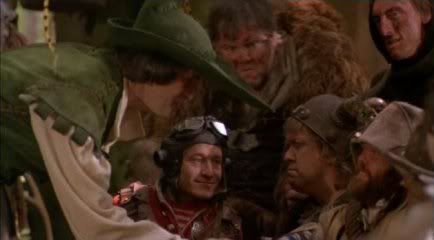
    <author>
        <name>Craig J. Clark and Joe Blevins</name>
        <uri>http://www.unloosen.com/control/?__mode=view&amp;blog_id=2&amp;id=45</uri>
    </author>
    
        <category term="Movies" scheme="http://www.sixapart.com/ns/types#category" />
    
        <category term="Reviews" scheme="http://www.sixapart.com/ns/types#category" />
    
    <category term="craigandjoewatchmoviesyouveactuallyheardof" label="craig and joe watch movies you&apos;ve actually heard of" scheme="http://www.sixapart.com/ns/types#tag" />
    
    <content type="html" xml:lang="en" xml:base="http://unloosen.com/">
        <![CDATA[<p><IMG SRC="http://i799.photobucket.com/albums/yy272/craigjoeproject/16terry.jpg"><br />
<blockquote><i>"Mum! Dad! Don't touch it! It's evil!"</i> - KEVIN, the soon-to-be-orphaned 11-year-old boy, at the end of <I>Time Bandits</I></blockquote><br />
Long before I knew who -- or what -- Monty Python was, I was already a fan of the work of half of that venerable comedy troupe's members thanks to a certain subversive children's film called <I>Time Bandits</I>, which was a big hit at the box office when it was released in 1981. Unfortunately, I didn't get to see it when it was in theaters, but thanks to frequent airings on PRISM (a Philadelphia-area premium cable channel that broadcast all the Flyers and Phillies home games, which is why my father insisted on it over higher-profile movie channels like HBO or Cinemax), it was a staple in the Clark household for many, many years. It was only much later when I started reading up on Monty Python in Kim "Howard" Johnson's <I>First 200 Years of</I> book that I discovered that Terry Gilliam, the American-born cartoonist who gave the <I>Flying Circus</I> its distinctive animated links, was also the man responsible for one of my favorite films of all time. Furthermore, it starred two other members of the troupe (John Cleese and Michael Palin) and one of them (Palin) had also co-written the film with Gilliam. If that doesn't make it a de facto Python film, then I don't know what will.<br />
 <br />
Anyway, whether they did so knowingly or not, Gilliam and Palin (and to a lesser extent Cleese) laid the groundwork for my future Python fandom (some might call it an obsession) and found the nexus between history and comedy that has informed my sense of humor to this day. That's a lot of baggage for a rollicking adventure story about a band of dwarfs in the employ of the Supreme Being who jump through holes in the fabric of time to steal from the rich and give to themselves, but <I>Time Bandits</I> can shoulder it. If it couldn't, it wouldn't be so well-beloved nearly three decades later -- and this isn't rose-tinted nostalgia talking. The film really does hold up and it stands as a testament to the power of imagination and individualism, two of Gilliam's pet themes which run through all of his films and which are embodied by its boy hero Kevin, played by 11-year-old Craig Warnock, who wins my vote for Best Child Actor Ever.</p>]]>
        <![CDATA[<p>Another theme that comes into play right from the get-go is the rampant materialism that Gilliam saw sweeping Britain, with Kevin's complacent parents watching a hideous game show called <I>Your Money Or Your Life</I> (hosted by a sleazy Jim Broadbent) and ignoring their son, whose enthusiasm for ancient Greek history could not have been hereditary. Rather, they're more concerned with the latest household gadgets and keeping up with the neighbors. "Well, at least we've got a two-speed hedge-cutter," moans Kevin's mum, making one wonder why such a thing would even be necessary. They're even the sort of family that has plastic on the furniture, which is a detail that pays off handsomely later on when it is revealed that David Warner's Evil Genius has <I>everything</I> in his domain (including his throne and his minions) covered in plastic as well.<br />
 <br />
As for Kevin, his adventure begins late one night when an armored knight on horseback comes crashing out of his wardrobe, which only disturbs his parents inasmuch as it makes a terrible racket. The next night Kevin is prepared, going to bed early with a satchel, a torch (that's a flashlight to us Yanks), and a Polaroid camera at the ready -- and they all come in handy when a band of six little people with a strange map emerge from the wardrobe after his parents have gone to bed. (His parents must be very heavy sleepers, too, since they don't come barging in after one of the well-armed bandits fires his machine gun into the ceiling.) Once they determine that Kevin isn't a threat, the bandits (who don't bother introducing themselves -- introductions are for polite people) enlist his help in finding the way out of his room and drag him along when the Supreme Being shows up (in a most intimidating guise) to recover his map. The bandits evade him, though, and, falling through a convenient time hole, land in Italy during the Napoleonic Wars.<br />
 <br />
It's at this point that the action pauses long enough for us to meet the title characters, a motley crew led by David Rappaport (as the autocratic Randall) which includes Jack Purvis (as Wally, wielder of the machine gun and soon to be a Gilliam regular), Kenny Baker (a.k.a. the man inside R2-D2 as Fidgit), Malcolm Dixon (as Strutter, the most level-headed of the bunch), Mike Edmonds (as the submoronic Og) and Tiny Ross (as the ravenous Vermin). They also reveal their objective, which is to rob the rich and famous throughout history, starting with Napoleon (played by first guest star Ian Holm, who later reappeared in <I>Brazil</I> as Sam Lowry's spineless boss). Since this is a film aimed at kids, Gilliam and Palin take the most basic piece of information about Napoleon -- that he was very short -- and make him out to be totally obsessed with the heights of world leaders. Of course somebody like that would be instantly attracted to the diminutive bandits ("That's what I like! Little things hitting each other!") and, one rousing rendition of "Me and My Shadow" later, they have his complete confidence. All they have to do is wait for him to drink himself into a stupor and then rob him blind, which is the point where Gilliam and Palin take the other piece of Napoleon trivia -- that he always kept his right hand tucked into his shirt -- and put a comical spin on it. That's the Monty Python way: introduce a legendary figure and completely take the piss out of them.<br />
 <br />
Case in point: the film's next stop is "exactly in the Middle Ages" -- more specifically, Jolly Old England during the time of Robin Hood. Before the group meets the freedom fighter in the green tights, though, they have a run-in with a pair of star-crossed lovers (Shelley Duvall and Michael Palin) whose romantic tryst they ruin -- and who will appear again later on -- and fill Kevin in on the backstory, which is a funny thing to do a half hour into a film, but at least it doesn't sound too much like exposition coming from Rappaport. Then, after spying a band of ruthless robbers at work, they arrange a meeting with the head Hood himself (an ingratiatingly oblivious Cleese), whose clean-scrubbed countenance is in sharp contrast to his unpleasantly grotty Merry Men. (Note the unmistakable buzzing of flies on the soundtrack.) As they did with Napoleon, Gilliam and Palin take the most basic thing everybody knows about Robin Hood -- that he stole from the rich and gave to the poor -- and turn it against the time bandits by having him requisition their sizable haul (which includes, among other things, the Mona Lisa) and give it away to the poor (who also receive a punch in the head just to even things out). Naturally this doesn't sit well with the diminutive thieves and they drag Kevin away before he can volunteer himself for a life of poor hygiene and dodging the guy who likes to arm-wrestle everybody.<br />
<IMG SRC="http://i799.photobucket.com/albums/yy272/craigjoeproject/16gilliams.jpg"><br />
While the bedraggled bandits try to figure out their next move, we're introduced to Evil, who is aligned with Kevin's parents thanks to his obsession with technology ("I would have started with lasers, eight o'clock, day one."), but whereas they sublimate their aggressive tendencies by watching game shows, Evil has a habit of blowing up his own underlings whenever they question him -- even if he admits it's a good question. And like Kevin's parents, Evil covets what other people have, like the Supreme Being's power ("When I have understanding of computers," he says. "<I>I</I> shall be the Supreme Being!") and the time bandits' purloined map. To acquire the latter, Evil takes control of Og's mind (not a difficult task) and plants the idea that they should go after the Most Fabulous Object in the World. First, though, Kevin is separated from the others and winds up in Ancient Greece, which leads somewhat unexpectedly to the most emotionally resonant section of the film.<br />
 <br />
This is largely because, faced with a legend (King Agamemnon of Mycenae) who's not so easy to pin down or make easy jokes about, Gilliam and Palin take a somewhat less heightened approach to the material and give Kevin the chance to actually experience what it would be like to live in ancient times (as opposed to just being a tourist). He fits in so well, in fact, that it's almost a pity that the meddling midgets have to catch up with him and abduct him, but before that happens Kevin spends some quality time with Agamemnon (an authoritative Sean Connery), the kind of father figure he wishes he had in real life. Agamemnon even teaches him a magic trick ("Kings aren't supposed to do things like that!") and offers to adopt him -- much to the visible dismay of the queen. On second thought, maybe it's a good thing Randall and company come along when they do. When Agamemnon makes his announcement the queen shoots him a look that could kill and it's easy to imagine Kevin being the one whose goose gets cooked.<br />
 <br />
Just as the time bandits robbed Napoleon only to lose their ill-gotten gains to Robin Hood, history repeats itself when they empty Agamemnon's coffers ("He didn't have anything to spend it on, did he?" Randall rationalizes. "Stuck out in Greece -- lowest standard of living in Europe.") only to wind up on the Titanic just prior to its sinking. (They also have their second run-in with Palin and Duvall's ill-fated couple, only this time instead of having a "problem," Palin has a thing on the end of his nose. Those two just can't catch a break, can they?) It's at this point that Evil pulls them into the Time of Legends -- where their formal wear is cleverly reversed -- and the gang has a terrifying run-in with a middle-aged ogre (Peter Vaughan, later to play a pivotal role in <I>Brazil</I>), his doting wife (Katherine Helmond, ditto), and a giant before making the arduous trek to the Fortress of Ultimate Darkness, where Randall is convinced they'll find the Most Fabulous Object in the World. But first they have to break through an invisible barrier ("Oh, so that's what an invisible barrier looks like," quips Og), after which the Fortress is revealed in all its malevolent glory. (No "It's only a model" cracks here, even if it is ultimately revealed to be built out of Lego bricks.)<br />
 <br />
Once they enter the Fortress -- over Kevin's protests -- the link between the power-hungry Evil and Kevin's materialistic parents is made about as explicitly as it can be. First of all, the Most Fabulous Object in the World turns out to be the Moderna Wonder Major All-Automatic Convenience Center-ette, which was the big prize on <I>Your Money Or Your Life</I>, and Jim Broadbent's unctuous host is employed to entice the bandits into handing over the map in exchange for it. (Kevin's parents are also there, beckoning him forward, but he doesn't take the bait.) Of course, the game show host is really Evil in disguise and once he has the map he imprisons the gang in a cage which is suspended over an abyss. This leads to the most suspenseful sequence in the film where they use their ingenuity to effect a death-defying escape, accompanied by an inspired improvisation by percussionist Ray Cooper. (I haven't mentioned it yet, but all of the music in the film is wonderful, from Mike Moran's rousing score to Trevor Jones's synth-heavy Greek dance piece to George Harrison's "Dream Away," which plays over the closing credits. If the powers ever saw fit to release a soundtrack for <I>Time Bandits</I>, I would snap it up in a heartbeat.) Then, with the help of warriors from the past (American cowboys and knights on horseback, Greek archers) and some more modern weaponry (a tank and a moon lander with a laser), they engage in a battle royale to the death with Evil, who takes on all comers single-handed.<br />
 <br />
And just how do we know that Evil really is evil? Well, for starters, he blows up a dog. (That's pretty evil by anyone's standards, especially coming from somebody who claims to be "a reasonable man") He can also control machinery, which is downright infernal, but what really puts him over the top is when he causes the death of Fidgit, easily the friendliest of the time bandits. It was all fun and games before, but all of a sudden it's serious (Wally's emotional outburst is proof of that), and Evil is on the verge of triumphing when the Supreme Being swoops in to put a stop to it. As embodied by Ralph Richardson, the Supreme being is a fussy headmaster who's more concerned with tidiness ("What a dreadful mess" is how he sums things up) than he is with finding reasonable explanations for his actions (or inaction, as it were). One of my favorite moments in the film comes when Kevin asks him a nagging question about the necessity of evil and he nips behind a column -- where, I imagine, he can take as much time as he needs to formulate an appropriate response -- and the only thing he comes back with is "I think it's something to do with free will." Because he is "the nice one," he resurrects Fidgit and puts everyone back to work for him. (Their first job: pick up all the pieces of concentrated evil that are scattered about the place. "One drop of that," the Supreme Being warns, "could turn you all into hermit crabs.") There's no place in Creation for Kevin, though, so he's left behind once again.<br />
 <br />
Which brings us to the controversial ending. Since Kevin wakes up back in his own bedroom (which is filled with smoke because his house on fire), that means it must have all been a dream, right? After all, the climactic battle with Evil is represented by the arrangement of the toys on his floor (which echoes the cut-out of the knight on the photo of the forest on his wall at the start of the film), so it's an open-and-shut case, right? Well, it doesn't take long for Gilliam and Palin to blow the lid off that theory, starting with the revelation that the firefighter who rescues Kevin is none other than Sean Connery. Then there's the satchel full of all the Polaroids he took during his adventures, which should be enough to convince the most hardened skeptic. But then comes the <I>pi&egrave;ce de r&eacute;sistance</I>: the thing that started the fire was the leftover piece of Evil that was missed when the bandits were cleaning up. Furthermore, when Kevin's parents touch it -- after being specifically told not to -- they explode, leaving two smoking piles of ashes. It's a dark ending, to be sure, and one that would have horrified my mother if she had taken me to see this in theaters. (Gilliam claims that it's not upsetting because Kevin has proved beyond a shadow of a doubt that he's capable of getting by without his disinterested parents, but I can understand it if some people don't buy that.) Personally, I was always disappointed that the film didn't include a shot of Kevin's parents as hermit crabs. That would have been awesome.<br />
<IMG SRC="http://i799.photobucket.com/albums/yy272/craigjoeproject/16time.jpg"><br />
Back in April of this year, I happened to take in Tim Burton's 3D "reimagining" of <i>Alice in Wonderland</i>, and something odd struck me. In the movies, characters are constantly being whisked away from the dull drudgery of their everyday lives and then magically (or at least improbably) deposited into colorful worlds of adventure and thrills. And how do these characters generally react? Are they grateful to have escaped the shackles of drab, workaday reality? Generally, the answer is no. Like Alice in Burton's movie, they spend the majority of the running time trying to get back home and whinging about every obstacle which stands in the way of that goal. "Please," these characters fairly demand, "restore me this instant to my previous state of stagnation and despair. I want tedious, predictable familiarity as soon as possible."<br />
 <br />
But not Kevin. Not the 11-year-old hero of <i>Time Bandits</i>. Once he's shanghaied by a gang of thieving, time-traveling dwarfs, he doesn't wuss out and start bawling for his mum. We've already met Kevin's mum by this point, and we know she's perfectly awful. His dad, likewise. Just dreadful people. They're not physically or verbally abusive, mind you. Director and co-writer Terry Gilliam mercifully spares us this too-common kids movie trope. We don't have to watch Kevin's dad thrash his son with a belt and say something like, "And you'll get more of the same if I ever hear you spouting any more of that dreamy nonsense!" No, they're just unimaginative, sedentary, and generally useless. In that sense, they're a lot like Uncle Henry and Aunt Em in <I>The Wizard of Oz</i>, in many ways the obvious cinematic progenitor of <i>Time Bandits.</i> But there's a difference. Henry and Em have some semi-redeeming characteristics. Em bakes crullers for her employees and tells off mean old Miss Gulch; cutely befuddled Henry deflates Miss Gulch's pomposity with his homespun humor. All Kevin's parents do is nag their son, stare blankly at the television, and natter on about consumer appliances.<br />
 <br />
The opening scenes of <i>The Wizard of Oz</i> have to establish a Kansas that's bad enough for Dorothy to want to leave but just (barely) good enough for her to want to come back. With the corresponding scenes from <i>Time Bandits</i>, Gilliam only has to accomplish the first half of that equation. Neither Kevin nor we in the audience would be sad if he left this place behind. But by the same token, Kevin isn't suffering too terribly here either. His room certainly has a good selection of toys, thanks to his parents' materialism. So when Kevin goes on his bizarre adventure with the time bandits, he's not weighed down with terrible emotional baggage. In contrast, please see Robert Zemeckis's <I>The Polar Express</i>, in which several of the young travelers have sad backstories and other emotional problems which initially keep them from fully enjoying the journey.<br />
 <br />
The sum total of all this is that Kevin is allowed to fully enjoy the amazing opportunity he's been given. He pays occasional half-hearted lip service to returning home, but even this dissipates by the movie's midpoint or so. Another good touch was the decision not to make Kevin a skeptic who refuses to accept the situation he's in. Again, contrast this film with <i>The Polar Express</i>, in which the young hero requires a truly <i>extraordinary</i> amount of convincing before he's ready to believe in Santa Claus. (Seriously, watch that movie sometime. That kid is a hardcore nonbeliever!) So if Kevin's not pining for home (or the fjords) and he's not asking pesky, practical questions about his situation, what is he doing? Well, for one, he's getting to fulfill every nerd's secret dream: putting his arcane knowledge to use. See, unlike his jaded, video-sated parents, Kevin is a bit of a history buff and is engrossed with grisly factoids about ancient warriors and famous battles. So when he joins the bandits in jumping from era to era, committing daring capers, the boy at least has a broad outline of human history -- the names, the places -- and therefore manages to collect his bearings fairly quickly in any given setting. That's a major asset both to the film and to the characters.<br />
<IMG SRC="http://i799.photobucket.com/albums/yy272/craigjoeproject/16ban.jpg"><br />
I did not grow up with this film, sadly. I would've been six when it came out, and when you're that age your parents pretty much decide what movies you see and don't see. The films I did see then were either ones with the reliable Disney or Spielberg brand names or installments of various franchises (<I>Superman, Star Wars, Muppets</i> etc.) I don't regret that. They were, nearly without exception, quite good films and instilled within me a love of movies that has stayed with me to this day. The downside, of course, is that I didn't see <i>Time Bandits</i> until I was an adult and the film came out on DVD, so I'll never know what effect the film might have had on a six-year-old me. But I don't want to return to childhood, even if it were possible to do so. Adults often <i>think</i> they do, but they forget the #1 activity of childhood: fantasizing about being grown up. That's what play is mainly about. Kids learn early on that it's the big people who have all the power and make all the decisions, so they covet adulthood and cherish each and every token of their own impending maturity. There is no greater insult to an eight-year-old than being accidentally referred to as a seven-year-old, and "babyish" is an adjective with a deadly connotation. Once your favorite toy or game has been called "babyish," it is very likely no longer your favorite. It's such a mixed-up world: people spend their childhoods wanting to be adults and their adulthoods wanting to be kids again.<br />
 <br />
One of the great, liberating things about <i>Time Bandits</i> is that, like <i>The Wizard of Oz</i>, it takes its young protagonist seriously. Salman Rushdie adroitly described Dorothy Gale as both the subject and object of her film and pointed out that, once she is deposited in Munchkinland, she is never treated as a child (as she was in Kansas) but as a heroine. Kevin, too, acts as both the subject and object of <i>Time Bandits</i> -- subject in that he is the main character with whom the story begins and ends (we are never long out of his presence), object in that he spends a lot of his time reacting to the rapidly changing circumstances of the plot. We in the audience generally gauge the situation by studying Kevin's reaction. (His instincts are spot on.) And like Dorothy, Kevin is immediately thrust into a position of mature responsibility, with dysfunctional adults actually relying on <i>him</i> and his expertise. People <i>older</i> than Kevin are actually looking to him for guidance and help! It's funny how <i>Time Bandits</i>, <i>The Wizard of Oz</i>, and Disney's <i>Snow White and the Seven Dwarfs</i> all partially accomplish this by introducing characters who are physically smaller than the hero. One of our most common synonyms for adult is "grown up," which twice emphasizes an individual's height. So it's no wonder that fantasy films are full of elves, dwarfs, Smurfs, Munchkins, Hobbits, Oompa Loompas, and other height-challenged beings. To a kid, that's a delightful paradox: the grown up isn't literally grown up. But, like Dorothy (and not like Snow White), Kevin hold his own against those larger than he is -- sometimes much larger! In the Time of Legends sequence, for instance, it's the boy who comes up with strategies for dealing with an ogre and a lumbering giant. And even the bona fide historical legends he meets turn out to be inadequate, immature, or incomplete in some way. Napoleon, unsurprisingly, has a pretty nasty Napoleon Complex and prefers puppet shows to battle. Poor, lonely Agamemnon's marriage has gone sour, and he longs for a son. Robin Hood is so cheerfully idiotic and vacantly genteel that you wonder how much longer he'll manage in his decidedly uncouth, coarse surroundings. Even God's workmanship turns out to be shoddy, and the man Himself is revealed as a blustery bureaucrat.<br />
 <br />
<i>Time Bandits</i> is a helluva thing. Three ensuing decades have only made the film look even better than it must have in '81. The production design is rich without being overbearing or garish. The humor is earthy and often dark without being snide or childish. It doesn't rely on cheap shots or pop culture references. It gets its jokes in, tells a cracking adventure story, and even has plenty of fodder for thought. Watching this film and <i>The Meaning of Life</i> back to back has been revelatory. Were films really this heedlessly ambitious and unreasonably entertaining just a few decades past? What a chasm exists between these bold Pythonic excursions and, let's say, <i>Furry Vengeance</i> or <i>Paul Blart: Mall Cop</i>. I don't mean to use those last two movies as easy examples simply because they're "mainstream" or popular with the "wrong" people. I don't know what "mainstream" even is anymore, and there are no "wrong" people. I'm just using those as examples of the safe, boring, numbing, formulaic, and cowardly films being churned out as children's films and comedies today. <i>Time Bandits</i> certainly was not made for the arthouses, and it turned a healthy profit on its initial investment. The art films and independent films will take care of themselves, as they always have. We need to demand more of our mainstream, strictly-for-entertainment, "fun" pictures -- kids flicks, comedies, action films, adventure stories! That's where we're lacking. Let's not put plastic slipcovers over our minds every time we duck into the cineplex, for Christ's sake.<br />
<IMG SRC="http://i799.photobucket.com/albums/yy272/craigjoeproject/16dits.jpg"><br />
<b>Up Next:</b> Well, we're coming up on the Halloween season, and since nothing is more frightening than modern man's alienation, we're going to thoroughly deconstruct Fassbinder's... Nah, I'm just messin' with ya. It's that singing killer plant movie. You know, the one with whatshisface. The squirmy little guy with the glasses from <i>Ghostbusters</i>. Oh, and that other guy. He's in it, too.</p>]]>
    </content>
</entry>

<entry>
    <title>A Person of Interest</title>
    <link rel="alternate" type="text/html" href="http://www.unloosen.com/thestuff/archives/2010/09/a_person_of_interest.html" />
    <id>tag:unloosen.com,2010://2.639</id>

    <published>2010-09-26T05:06:13Z</published>
    <updated>2010-09-26T05:11:16Z</updated>

    <summary>Witness the plight of the once mighty space yak....</summary>
    <author>
        <name>Chris Leavens</name>
        <uri>http://www.unloosen.com/control/?__mode=view&amp;blog_id=2&amp;id=1</uri>
    </author>
    
        <category term="Chris Leavens" scheme="http://www.sixapart.com/ns/types#category" />
    
        <category term="Images" scheme="http://www.sixapart.com/ns/types#category" />
    
    
    <content type="html" xml:lang="en" xml:base="http://unloosen.com/">
        <![CDATA[Witness the plight of the once mighty space yak.<br /><br /><a href="http://unloosen.com/assets_c/2010/09/Person1v2-213.html"><img src="http://unloosen.com/assets_c/2010/09/Person1v2-thumb-500x625-213.png" alt="Person1v2.png" class="mt-image-center" style="text-align: center; display: block; margin: 0pt auto 20px;" height="625" width="500" /></a><br /><div><br /></div>]]>
        <![CDATA[<a href="http://unloosen.com/illustration/Person1v2d3.png"><img alt="Person1v2d3.png" src="http://unloosen.com/assets_c/2010/09/Person1v2d3-thumb-500x505-216.png" class="mt-image-center" style="text-align: center; display: block; margin: 0pt auto 20px;" height="505" width="500" /></a><br /><a href="http://unloosen.com/illustration/Person1v2d2.png"><img alt="Person1v2d2.png" src="http://unloosen.com/assets_c/2010/09/Person1v2d2-thumb-500x740-218.png" class="mt-image-center" style="text-align: center; display: block; margin: 0pt auto 20px;" height="740" width="500" /></a><br /><a href="http://unloosen.com/illustration/Person1v2d1.png"><img alt="Person1v2d1.png" src="http://unloosen.com/assets_c/2010/09/Person1v2d1-thumb-500x386-220.png" class="mt-image-center" style="text-align: center; display: block; margin: 0pt auto 20px;" height="386" width="500" /></a><br /><div><br /></div><div><br /></div><div><br /></div>]]>
    </content>
</entry>

<entry>
    <title>Monty Python&apos;s The Meaning of Life, reviewed by Joe Blevins and Craig J. Clark</title>
    <link rel="alternate" type="text/html" href="http://www.unloosen.com/thestuff/archives/2010/09/monty_pythons_the_meaning_of_l.html" />
    <id>tag:unloosen.com,2010://2.638</id>

    <published>2010-09-09T21:22:09Z</published>
    <updated>2010-09-10T22:55:53Z</updated>

    <summary> &quot;We praised the Almighty far beyond what any reasonable entity would have felt comfortable with, and blessed many, many things.&quot; - ETHAN COEN in his short story &quot;I Killed Phil Shapiro&quot; What kind of sane, rational, responsible God would...</summary>
    <author>
        <name>Joe Blevins and Craig J. Clark</name>
        <uri>http://www.unloosen.com/control/?__mode=view&amp;blog_id=2&amp;id=44</uri>
    </author>
    
        <category term="Movies" scheme="http://www.sixapart.com/ns/types#category" />
    
        <category term="Reviews" scheme="http://www.sixapart.com/ns/types#category" />
    
    <category term="craigandjoewatchmoviesyouveactuallyheardof" label="craig and joe watch movies you&apos;ve actually heard of" scheme="http://www.sixapart.com/ns/types#tag" />
    
    <content type="html" xml:lang="en" xml:base="http://unloosen.com/">
        <![CDATA[<p><IMG SRC="http://i799.photobucket.com/albums/yy272/craigjoeproject/15monty.jpg"><br />
<blockquote><i>"We praised the Almighty far beyond what any reasonable entity would have felt comfortable with, and blessed many, many things."</i> - ETHAN COEN in his short story "I Killed Phil Shapiro"</blockquote><br />
What kind of sane, rational, responsible God would actually <i>want</i> to be worshiped? Shouldn't God be embarrassed by all those flattering hymns, prayers, and ceremonies -- not to mention wars -- in His honor? You'd think so, but a good portion of the Old Testament is given over to God's all-consuming desire to be venerated and obeyed by the people He created. In fact, according to many of His most fervent admirers, God still disapproves of such practices as birth control, homosexuality, and divorce because they deprive Him of earthly offspring. After all, fewer babies mean fewer worshipers, and He can't tolerate that. So be fruitful and multiply, everybody, and if you're a destitute Catholic ex-mill-worker with 70 hungry Catholic children and no income with which to support them, well, you can always sell the little buggers for medical experiments.<br />
 <br />
These were among my thoughts as I recently re-watched <i>Monty Python's The Meaning of Life</i> for what must be the fiftieth time. I "discovered" this 1983 film, the troupe's last proper group effort, during the early 1990s when I was still in high school, and I'm happy to report that it is still able to make me laugh -- and think -- all these years and viewings later. In fact, when screening the DVD in preparation for this article, I chortled loudly at the antics of Michael Palin's buffoonish Sgt. Major and John Cleese's fawning French-accented Maitre D', even though I knew in advance everything these men were going to say and do. If anything, time has given this film a luster it might not even have had when it was originally released. Nowadays, when "comedy" largely consists of pop culture in-jokes, jaundiced snark, and infantile male bonding, a comedy as audacious and ambitious as <i>The Meaning of Life</i> is a thrill.<br />
 <br />
And yet, even today, the film does not get the respect that it perhaps deserves from critics, viewers, and even the Pythons themselves, who are divided as to the film's merits. Mention <i>The Meaning of Life</i> on any film-related Internet forum, and you'll get the same few standard complaints. Perhaps foolishly, I will try to address these one by one. Let's see now...</p>]]>
        <![CDATA[<p><b>1. The film is "uneven."</b><br />
 <br />
Ah. I see. So "evenness" is what you are seeking from comedy? Equanimity? Parity? Is that it? Hmmm. This is a curious view indeed, though a depressingly common one these days. I think the rise of the word "uneven" as a critical clich&eacute; -- and it is a loathsome one, as are most clich&eacute;s -- mirrors the ascent of mood-stabilizing drugs like Paxil and Prozac. With our moods now nicely evened out, we now seek predictability and consistency in all facets of our lives, including our entertainment. How sad. You will forgive me for disagreeing with the majority viewpoint on this. I, for one, think evenness has no place in comedy. Sideburns and wallpaper should be even, but not art and definitely not humor. A comedy should, by design, be a jagged series of highs and lows, not a flat line. In the last ten years or so, most film comedies have not aimed particularly high. They've sought -- and reached -- a middle ground, aiming for a general sense of vague amiability rather than big laughs or big ideas. In short, "evenness" is all around us, and yet this has not created a golden age for screen comedy. I tend to side with William Allen White, who defined "consistency" as "a paste jewel that only cheap men cherish." And when Berkeley Breathed describes Jim Davis's "Garfield" as being "consistent," he does <i>not</i> mean that as a compliment. Incidentally, there are two full-length <i>Garfield</i> movies which may well supply the elusive "evenness" you seek from the filmgoing experience.<br />
 <br />
<b>2. The movie is too "dark" and "mean."</b><br />
 <br />
Well, now you are coming out into the open. <i>Poor widdle baby. Dat bad ol' movie hurt your itty bitty feewings.</i> Being a delicate snowflake, you clearly feel that comedy is meant to comfort us, give us a hug, fix us a mug of cocoa, and tell us to keep up the good work. Is that what you're looking for? A gold star and a pat on the back? Again, you and I see things very differently. I feel that comedy exists to point out the absurdities of the world and hold them up for ridicule. Comedy exposes fraud and dishonesty. Comedy slices through pomposity and hypocrisy in the interest of truth, even if the truth is unpleasant. It's tough to do all that and be nice about it. <i>The Meaning of Life</i> is not always a gentle movie, but I don't think its intention is to be cruel. I think of the film more as constructive criticism. We can all stand a little of that, can't we? Besides, compared to a lot of the truly dark, nihilistic comedy so easily found on television and the Internet, <i>The Meaning of Life</i> is comparatively gentle. It ends, after all, with a plea for peace and understanding. Yes, that plea is directed specifically at fish, but still, a plea's a plea.<br />
 <br />
<IMG SRC="http://i799.photobucket.com/albums/yy272/craigjoeproject/15python.jpg"><br />
 <br />
<b>3. The movie's "style" overwhelms its humor.</b><br />
 <br />
Oh, come now. You can't be serious about this one. You are? Well, all right, I suppose I can be bothered to refute this canard as well. Of course, this is a matter of personal taste, but I think the movie looks very impressive throughout and that the cinematography, costumes, and production design add immensely to the viewer's (i.e. my) enjoyment. But you, obviously, think a comedy should be plain, spartan, unadorned, and as close to the no-frills "Dogme 95" aesthetic as possible. Is that right? Yet again, your views and mine are irreconcilable. I feel that making a comedy in no way excuses the director from the responsibility of delivering a fundamentally well-crafted film. Movies, even humorous ones, are essentially Things To Look At, as I've said before, and should therefore be visually stimulating rather than drab, flavorless, and ugly. Like any other films, comedies ought to keep the viewer's eye constantly engaged. I admit that's an old-fashioned view, especially in the YouTube era when comedy is largely doled out to us in the form of clips that run five minutes or less, are shot on cell phones and webcams, and are viewed at roughly the size of a beer coaster. <i>The Meaning of Life</i> is, without apology, a Big Film for the Big Screen. I don't really see how the film's "style" overwhelms it at any point. In fact, when revisiting the film, I was grateful that director Terry Jones frequently lets the comedy play out in longer takes, rather than the hack-and-slash editing style we see too often today<br />
 <br />
In this and numerous other ways, it doesn't really fit with any of the present-day paradigms for humor. It's not deadpan. It's not a mockumentary. It's not about loveable man-children getting into wacky shenanigans and learning something along the way. Well, it sort of fits that last one, but not in the <i>Old School/Hangover</i> way. Most of our top-grossing screen comics in 2010 -- the good ones and bad ones alike -- desperately want to be loved. They want to seem like regular guys, perhaps the idealized drinking buddies we never had. Think of Jack Black, Will Ferrell, Adam Sandler, etc. Every last one of 'em wants to be our bestest friend in the whole wide world, and each one suffers from a serious case of Peter Pan Syndrome. Python's not like that. They never were. Here's critic Danny Peary describing the troupe in his book, <i>Cult Movie Stars</i>. If you skip my entire half of the article, at least read this following passage carefully:<br />
 <br />
<blockquote><I>Most unusual is that the Python characters are rarely sympathetic. The actors themselves don't have audience-endearing physical quirks (a big nose, a big belly, a weakling's body, bad eyesight) but are imposing men (even when dressed as women), physically and intellectually, who are always on the attack.</i></blockquote><br />
The key word here is "men." Whereas most of our current screen comedians are overgrown boys (often with scolding, joy-killing wives and girlfriends), <i>Monty Python</i> is about the often-intimidating world of men. Throughout <i>The Meaning of Life</i>, we see adults dealing with adult problems like war, religion, commerce, sex, death, and -- yes -- the meaning of it all. The cast of characters in this film is rife with authority figures -- headmasters, priests, doctors, businessmen. The world presented in this film is often harsh and unsettling. This film is <i>not</i> here to tell us what we already know and reassure us that we're doing just fine. But, again, it's not nihilistic either. The truly "dark" humorists of 2010 -- found mainly on the Internet and occasionally on cable television -- seem to be operating under the motto, "Nothing ultimately matters, so let's piss wherever we want." To me, that's nearly as unsatisfying as the false comfort of the male bonding comedies at the other end of the spectrum. A film like <i>Monty Python's The Meaning of Life</i> stands as an alternative to both of these viewpoints. I wish there were ten more films like it coming out each year.<br />
 <br />
I realize that I've not really described or reviewed the film at all so far. I apologize for that, but you have to understand my perspective here. When I was preparing for this article, I read many reviews of the film, and eventually the repetitive, predictable complaints about it really started to irritate me. Here we have six of the funniest men of the Twentieth Century operating at the peak of their powers, giving us this comedy that is -- to me -- light years beyond what generally reaches our cineplexes today, and all people can do is nitpick it to death. You just want to throw up your hands. The last live-action comedy I saw in a movie theater was a film called <i>Grown Ups</i>. You know, the one with Adam Sandler, Chris Rock, Kevin James. Yeah, those guys. Like <I>The Meaning of Life</i>, the Sandler film stars a group of famous TV sketch comics approaching middle age and purports to take on some larger issues of life. But it's also one of the laziest, hackiest films I've ever seen. A good portion of the screen time is given over to the film's stars just sitting in Adirondack chairs reciting lame one-liners. I'm not kidding -- Adirondack chairs! We allow this unambitious drivel to reap untold fortunes at the box office, while we complain that <I>The Meaning of Life</i> has too much "style" or isn't "even" enough? This film is comedic manna from heaven, and we're checking the "Nutrition Facts" on the back. Gah!<br />
 <br />
This movie is too good for us. We don't deserve it. We can't have nice things.<br />
<IMG SRC="http://i799.photobucket.com/albums/yy272/craigjoeproject/15meaning.jpg"><br />
Ladies and gentlemen of the jury, this Monty Python fan who stands before you has no choice but to cop a plea of guilty to the charge of referring to <I>The Meaning of Life</I> as "uneven." He has done so on numerous occasions and will most likely continue to do so as long as the film work of that venerable troupe comes up in conversation, which he hopes will be for many years to come. In his defense, he would like to point out that he also considers <I>The Meaning of Life</I> to be his favorite Python film -- and not just because he's a contrarian by nature. Whereas <I>Holy Grail</I> easily wins the popularity contests and <I>Life of Brian</I> is the strongest in terms of narrative, <I>The Meaning of Life</I> lives and dies on the strength of its material, and while he contends that some of it isn't as sharp as it could be, the bountiful highlights more than compensate for the occasional comedic lull.<br />
 <br />
Nevertheless, there are a number of reasons why <I>The Meaning of Life</I> doesn't necessarily leap to mind when people are asked to name their favorite Python film. For one thing, it was their last cinematic outing, so there are those who may automatically assume there was a concurrent drop-off in quality and therefore tend to underrate it. For another, unlike their previous escapades it was actually financed by a major studio (in this case, Universal, which was soon to cause much trouble for Terry Gilliam when it came to the American release of his masterpiece <I>Brazil</I>), so there may be a lingering perception that it was born of compromise and studio tampering. Then there are the widely publicized interviews where the Pythons themselves -- John Cheese and Terry Jones chief among them -- have repeatedly said that the film didn't come together as well as it should have. Between Cleese's oft-stated claim that sketch films invariably run out of steam after an hour or so and Jones's assertion that the script was one rewrite away from being wholly unified, there's a lot of fodder for the argument that <I>The Meaning of Life</I> is somehow less than the sum of its parts. But why split hairs when the parts are so wonderful in and of themselves? Accordingly, it's tempting to go through the film sketch by sketch, but that would probably yield few insights beyond what one can glean from reading its Wikipedia entry. Rather, it would be more instructive to look at the contributions of each individual Python.<br />
 <br />
<B>Graham Chapman:</B> After playing the leads in both <I>Holy Grail</I> and <I>Life of Brian</I> (which precluded him from taking on too many supporting characters), Chapman must have chomping at the bit to play as many different parts in this film as he possibly could because he winds up filling the most roles out of all the Pythons. (Eric Idle's a close second.) His first appearance is quite memorable, too, since he plays one of the lackadaisical doctors in the "Birth" sequence which gets the film as a whole off to a rousing start. Considering the group was on the verge of scrapping the project altogether (since it wasn't coming together the way <I>Life of Brian</I> had) when he and John Cleese dashed off this brilliant invective on the dehumanizing effects of technology in the field of medicine (consider all of the hullabaloo surrounding the machine that goes "Ping!"), one could even make a case for it as the most important sketch in the whole thing. Good thing it's a memorable one filled with pitch-perfect performances by Chapman, Cleese and Michael Palin as the dim hospital administrator who needs to have the concept of giving birth explained to him. Chapman also gets to show off his impeccable bedside manner (after all, he actually was trained as a doctor) when he's left alone with the poor, neglected mother after the show is over.<br />
 <br />
Chapman's role in "Birth" isn't the only time he gets to show off his medical acumen. He also puts in an appearance as a jovial medical officer in the Zulu Wars whose main function is reassuring the officers that whatever they may have come down with couldn't possibly be more life-threatening than a pesky virus. This even applies to one who's had his leg bitten off, who is told he'll be "as right as rain in a couple of days" and that if he's playing football, he should try to "favor the other leg" (a piece of advice that reminds me of Peter Cook & Dudley Moore's brilliant "One Leg Too Few" sketch from <I>Beyond the Fringe</I>). Eventually he has to come clean when the officer (an implacable Eric Idle) asks whether it will grow back again, at which point Chapman backpedals on the virus explanation because "a virus is what we doctors call very, very small." So that makes two scenes where doctors talk down to patients as if they're small children. Lastly, Chapman is the one who gets to do all the dirty work in the "Live Organ Transplants" scene, even if his character would be the first to admit that he isn't a doctor. The <A HREF="http://www.unloosen.com/thestuff/archives/2009/10/repo_the_genetic_opera_--_revi.html">Repo Man</A> has more finesse.<br />
 <br />
Before moving on from Dr. Chapman, it would be a crime not to single out his performance as the upright Yorkshire Protestant railing against his Catholic neighbors or his role as the military recruiter who's struck down by the Hand of God. I don't think any other Python exuded dignity quite the way he did, especially when playing misguided authority figures. His holier-than-thou Protestant is a great case in point: Here's a man who's well-versed in religious history, but all he does with that knowledge is lord over his less well-off neighbors the fact that he can wear a condom. Just like a respectable Englishman to be obsessed with sex, even if he himself isn't having any.<br />
 <br />
<B>John Cleese:</B> That's not a problem that Cleese's headmaster has since, in the middle of an exceedingly frank sex education class (which his students still manage to be terminally bored by) he actually has intercourse with his wife (played by a game Patricia Quinn, late of <I>Rocky Horror</I> and <A HREF="http://www.unloosen.com/thestuff/archives/2010/05/shock_treatment_reviewed_by_jo.html"><I>Shock Treatment</I></A>). This is, of course, not to say that enjoys it at all. Just before he mounts Quinn (having taken the foreplay "as read"), he admonishes his students to pay attention because he has "no intention of going through this all again." Unlike most of the characters in the film, Cleese's headmaster pulls double-duty since he carries over from the previous scene, which skewers the English private school system, a favorite target of the Pythons since they were, for the most part, products of it.<br />
 <br />
With the exception of Terry Gilliam, Cleese plays the fewest roles of all the Pythons in the film, but as befits the most visible member of the group he makes each one count. Starting with his disinterested doctor (who allows Chapman to do the episiotomy as long as he gets "to put the tube in the baby's head"), Cleese stakes out the characters who consider themselves above the rabble, from his oblivious Zulu Wars-era officer to the obsequious maitre d' who knows just how to handle the odious Mr. Creosote to the very specter of Death himself, who claims an entire dinner party in one fell swoop but not before insulting everyone first. This isn't to say Cleese can't play more earthy types -- his World War I soldier and working-class organ extractor both come to mind -- he's simply less adept at bring them to life. He also doesn't fare too well as the braying American waiter who tries to interest a couple of middle-aged vacationers in a conversation about philosophy, but I suspect that has as much to do with the abrasive character he's playing as his performance. If there's any one group of people who don't come off well in <I>The Meaning of Life</I>, it's Americans.<br />
 <br />
<B>Terry Gilliam:</B> That brings us to the troupe's solo American member, whose main contribution is <I>The Crimson Permanent Assurance</I>, a (mostly) standalone short about a crew of aged accountants who throw off the yokes of their oppressors, take up the mantle of corporate piracy and set sail on the high seas of international finance. Originally intended to be a brief interlude during the main feature, the idea ballooned under Gilliam's direction, largely due to his decision to shoot it as live-action instead of cut-out animation. (With three features under his belt, the idea of chaining himself to an animation stand for weeks on end must have held little appeal.) This also caused the short to go way over budget, but all you have to do is watch it to know that Gilliam made sure all the money wound up on the screen. And it's good to know that, in today's harsh economic climate, its satirical barbs are more pointed than they ever were. As a bonus, watch for Matt Frewer (the future Max Headroom) as an executive of the company that is the target of the Crimson Permanent Assurance's first raid. (Sure, he comes to bad end, but it's nowhere near as embarrassing as his cameo in <I>Supergirl</I> the following year.)<br />
<IMG SRC="http://i799.photobucket.com/albums/yy272/craigjoeproject/15life.jpg"><br />
Even as he edged away from animation, Gilliam produced some fine work with his opening credits for the film, as well as one last sketch (about suicidal leaves) during the section on "Death." On the acting front, he commits not one but two completely bizarre characters to celluloid with his Jewish Rastafarian organ donor (the one who claims he can't donate his liver right that minute because, as he says, "I'm using it.") and the ostentatious Southern belle-type who recommends the Dungeon Room (with its "authentic medieval dungeon atmosphere") to the dull American couple during the section on "Middle Age." (Get it?) His finest role, however, is that of the American who won't stop talking and gets dressed down by Death as a result. (The captions don't catch what he says, but as the spirits of the now-deceased dinner guests get up to leave Gilliam insecurely asks his wife, "Do you think I talk a lot?") It's a far cry from the grotesques, grumblers and grunters he was usually called on to play and proves that he could hold his own with the other members of the group when the occasion called for it.<br />
 <br />
<B>Eric Idle:</B> After Gilliam, the Python most likely to work alone was Idle, and since films have less of a call for the one-man (or, at the very least, one-sided) sketches that were his specialty on the television series, it's not always easy to discern his contributions to the group's features. That's not really a problem with <I>The Meaning of Life</I>, though, since his niche as the group's main songwriter serves him in good stead here. First there's the "Accountancy Shanty," a song that was originally performed on Idle's post-<I>Flying Circus</I> sketch comedy series <I>Rutland Weekend Television</I>, which is put to good use in <I>The Crimson Permanent Assurance</I>. Then there's the title song, which establishes many of the themes that would be expounded on during the course of the film and features one of Idle's best vocal performances. That's equaled by his exceedingly clever "Galaxy Song," which is so profound that it even gets reprised over the closing credits, and the "frightfully witty" song he "tossed off in the Caribbean" and which serves as the profane precursor to Mr. Creosote's entrance. And he gets points for writing the tune for "Christmas in Heaven," which is so damn catchy that days later it's still in my head and probably will be for a long time to come.<br />
 <br />
As for his non-musical roles, Idle fares best as the sexually frustrated Protestant wife who clearly isn't getting enough at home, the World War I soldier who turns on his commanding officer (played by Terry Jones) when Jones seems ungrateful for the lavish gifts the squad has chosen to bestow on him while they're being shelled, the officer who loses his leg during the Zulu Wars and whose biggest complaint is that it "stings a bit," one half of the boring middle-aged couple who somehow thinks Selena Jones is a philosopher because her name begins with an S, and the mortified wife who served tainted salmon mousse to her guests. The two parts that are quintessential Idle, though, are the Zulu War soldier who rattles off a speech about the morality of killing during wartime (which, while heartfelt, is one of the weaker passages in the film) and that of Gaston the waiter, who, in the aftermath of Mr. Creosote's demise, leads the camera of a lengthy journey to the house where he was born. There he shares his personal philosophy, which isn't as profound as he probably thought it was when he first set out, but it gives the crew the excuse to pull off one of the most technically impressive shots in the whole film as the camera follows Idle out of the restaurant, down some stairs, out the front door and across a busy street -- all without a single cut. Sure, it's kind of show-offy, but whoever said showing off in a comedy was a bad thing?<br />
 <br />
<B>Terry Jones:</B> As the director of the film, Jones spends a lot more time behind the camera than he does in front of it (this was also the case with <I>Life of Brian</I>), but he really pulls out all the stops for the "Every Sperm Is Sacred" number, a visually extravagant sequence that sets a high-water mark that the rest of the film never quite manages to match. (I guess he shot his wad early.) Other highlights in terms of the directing are the World War I sequence, which was probably a nightmare to shoot but looks incredibly authentic, and the dinner party which is crashed by Death. (Coincidentally enough, those are the two scenes -- apart from the wraparound segments with the lot of them as fish in an aquarium -- that feature all six members of the troupe.) Then there's the "Mr. Creosote" sketch, for which Jones deserves a medal for pulling off while playing one of the most repugnant characters in the history of cinema. John Cleese may get the lion's share of credit for making it funny, but Jones is the one doing all the heavy lifting, in a manner of speaking. He also has a nice bit at the end as Maria the cleaning woman, who delivers a stirring soliloquy about her own search for the meaning of life (in rhyming couplets, no less), then nullifies it with her revelation that she isn't depressed about her lot in life because "At least I don't work for Jews." To say she gets what she deserves is an understatement, but I still feel bad for Jones the actor at that moment.<br />
 <br />
<B>Michael Palin:</B> Last but not least, there's likable everyman Palin, who scores early with his downtrodden mill worker who has to sell his children for medical experiments when he loses his job, and, with his Yorkshire accent intact, carries us through the opening bars of "Every Sperm Is Sacred" with aplomb. It's been said that Palin was the glue that held Python together and in this film he's the perfect utility player, popping up all in all sorts of places. I've already mentioned his role as the hospital administrator who knows nothing about actually running a hospital. (He could be put in charge of factory that makes toasters and it probably wouldn't make any difference to him.) He also put his stamp on the soldiers and officers he plays during the section about "Fighting Each Other" (in fact, his most memorable role in the whole film is probably the fanatical sergeant major who browbeats his entire squad out of his little scheme of marching up and down the square) and the intellectually incurious Midwesterner who orders a conversation about philosophy and then sends it back, saying it "isn't very good." He doesn't have much better luck with his attempts at logic as Debbie (wife of Terry Gilliam) in the dinner party scene, but she does nearly get one over on Death, which is nothing to sneeze at.<br />
 <br />
When you get right down to it, no matter how much praise I lavish on the individual members, a film like <I>Monty Python's The Meaning of Life</I> is a group effort through and through. There was a certain alchemy that happened when these six people put their heads together that simply can't be replicated. As a cinematic swan song, I doubt they could have asked for a better send-off. And as for the meaning of life itself, personally I find it comforting that there's somebody out there who thinks it can be boiled down to something as simple as "People aren't wearing enough hats." Just don't tell that to anyone who wakes up one morning and finds he has "one sock too many." That sort of thing would be liable to confuse the dickens out of them.<br />
<IMG SRC="http://i799.photobucket.com/albums/yy272/craigjoeproject/15of.jpg"><br />
<B>Up Next:</B> Monty Python month concludes with a trip through time and space with a desperate band of international criminals. Well, going-to-be international criminals.</p>]]>
    </content>
</entry>

<entry>
    <title>Moonlight Swim</title>
    <link rel="alternate" type="text/html" href="http://www.unloosen.com/thestuff/archives/2010/08/moonlight_swim_by_craig_j_clar.html" />
    <id>tag:unloosen.com,2010://2.637</id>

    <published>2010-08-26T11:04:00Z</published>
    <updated>2010-09-04T23:24:29Z</updated>

    <summary><![CDATA[Honestly, detective, this is all just a big misunderstanding. I tried to explain the situation to the officer on the scene, but if you want me to go over it again, I guess I have no choice.&nbsp;It was after dark...]]></summary>
    <author>
        <name>Craig J. Clark</name>
        <uri>http://www.unloosen.com/control/?__mode=view&amp;blog_id=2&amp;id=18</uri>
    </author>
    
        <category term="Craig J. Clark" scheme="http://www.sixapart.com/ns/types#category" />
    
        <category term="Fiction" scheme="http://www.sixapart.com/ns/types#category" />
    
    
    <content type="html" xml:lang="en" xml:base="http://unloosen.com/">
        <![CDATA[Honestly, detective, this is all just a big misunderstanding. I tried to explain the situation to the officer on the scene, but if you want me to go over it again, I guess I have no choice.<br />&nbsp;<br />It was after dark and the pool was completely deserted -- I can see it from my bedroom window -- so I decided to take a late-night swim while I could have it all to myself. I got into my bathing suit, grabbed a towel, slipped on a pair of flip-flops and headed over there. I don't know how long I was in the water because I didn't take my watch with me, but after a while I heard a siren and saw blue and red lights playing on the buildings in the courtyard around me. I figured there must have been a disturbance somewhere in the complex but didn't realize that disturbance was me until the uniformed policeman rounded the corner of the rental office and opened the gate to the pool area. Dumbfounded, I watched him as he threaded his way between the deck chairs down to the deep end, where I was treading water.<br />&nbsp;<br />"Is there a problem, officer?"<br />&nbsp;<br />"Yes, I'm going to have to ask you to step out of the pool."<br />]]>
        <![CDATA[I tread water for a few seconds trying to figure out what was going on.<br />&nbsp;<br />"I'm not trespassing, if that's what you're thinking. I live in that building over there." I pointed to the one at the rear of the complex.<br />&nbsp;<br />"That's nice, sir. Now, I need you to get out of the pool."<br />&nbsp;<br />"Why? I'm not breaking any laws."<br />&nbsp;<br />"Sir, just get out of the pool, please."<br />&nbsp;<br />"Not until you tell me what this is all about." I folded my arms, which caused me to go under momentarily. I quickly resurfaced and swam toward the shallow end so I could stand on the bottom. The policeman followed.<br />&nbsp;<br />"If you must know, there have been complaints."<br />&nbsp;<br />"Complaints? What complaints?"<br />&nbsp;<br />"Complaints about you being in the pool."<br />&nbsp;<br />"Why? It's open to all residents until ten o'clock. And I know it isn't after ten yet."<br />&nbsp;<br />"The time isn't the issue, sir."<br />&nbsp;<br />"Then what is?"<br />&nbsp;<br />The policeman didn't say anything.<br />&nbsp;<br />"Listen, if someone told you I was skinny dipping, you can see for yourself that I'm wearing a bathing suit."<br />&nbsp;<br />"That's not what the complaint was about. Are those all your belongings?"<br />&nbsp;<br />He pointed across the pool at the deck chair where I had deposited my flip-flops and towel.<br />&nbsp;<br />"Yes, officer. What about them?"<br />&nbsp;<br />He was already en route. "Maybe they'll be more forthcoming than you are."<br />&nbsp;<br />"More forthcoming? What are you talking about? What are you doing?"<br />&nbsp;<br />The policeman had reached the deck chair and was shaking out my towel, which had been neatly folded.<br />&nbsp;<br />"Aha! Just as I suspected."<br />&nbsp;<br />"Hey! Who told you you could go through my things?"<br />&nbsp;<br />The policeman dropped my towel and pulled out a notebook. "I thought you said you were a resident here."<br />&nbsp;<br />"I am, officer."<br />&nbsp;<br />"Then why don't you have a key to your apartment? I find that very suspicious."<br />&nbsp;<br />"On the contrary, it's not suspicious at all because I live right over there, as I told you, and I don't need to lock my door to take a short swim."<br />&nbsp;<br />The policeman was examining my flip-flops closely. "No I.D., either. This is not looking good for you, sonny."<br />&nbsp;<br />"Of course I don't have my I.D. on me. It's in my wallet."<br />&nbsp;<br />"And just where is your wallet, then?"<br />&nbsp;<br />"It's in the pocket of my jeans which are lying on my bed in my bedroom which is in that building right over there."<br />&nbsp;<br />I pointed frantically, but the policeman seemed to take no notice.<br />&nbsp;<br />"A likely story, sir. Now, are you going to come along peacefully?"<br />&nbsp;<br />"Come along where? What are you charging me with?"<br />&nbsp;<br />The policeman looked at me over his notebook and flashed me a grin. "Vagrancy."<br />&nbsp;<br />I quickly realized that I wasn't talking my way out of anything, so I resigned myself and got out of the pool. By the time I had dried myself off, a number of my fellow residents had come out of their apartments to see what was happening. I appealed to them to identify me for the benefit of the cop, but none were willing to stick their neck out. I asked the police officer to at least let me go inside my apartment and put on some pants since I didn't want to go downtown dressed only in a bathing suit and towel, but he refused. In fact, he said if I did go into my apartment he would charge me with breaking and entering! Have you ever heard anything so preposterous?<br />&nbsp;<br />Anyway, that's what happened. I don't know who called in the complaint or why, but your policeman didn't seem interested in hearing my side of the story, so here I am. Now, can &lt;I&gt;you&lt;/I&gt; tell me what this is all about?<br />&nbsp;<br />But detective, I told you what I was doing in the pool. I was taking a swim.<br />&nbsp;<br />Sure, it was after dark, but I've gone swimming after dark many times. It's not like this was an unusual occurrence.<br />&nbsp;<br />No, as a matter of fact, it doesn't sound "fishy" at all. Look, all you have to do is take me back to my apartment and I'll prove that I'm who I say I am.<br />&nbsp;<br />No, you can't call my roommate to verify my identity because he isn't home.<br />&nbsp;<br />If you must know, he's on vacation.<br />&nbsp;<br />Yes, he does have his cell phone with him, but I don't have the number memorized. I do have it written down on a piece of paper in my wallet, though, and you know where that is.<br />&nbsp;<br />Sigh...]]>
    </content>
</entry>

</feed>